Leave Your Message
Choosing reliable Air Filter Plastic Frame Suppliers requires more than comparing catalog prices. Frame quality affects sealing, airflow, durability, and waste during installation. A warped plastic edge can create visible gaps around a filter. That small defect may reduce real-world performance.
The World Health Organization reported that 99% of the global population lived with air exceeding its guideline limits in 2019. The U.S. Environmental Protection Agency also states that indoor pollutant levels can be two to five times higher than outdoor levels, and sometimes much higher. These figures strengthen demand for dependable filtration components. MarketsandMarkets estimates that the global air-filter market will grow from approximately USD 14.3 billion in 2023 to USD 20.5 billion by 2028. The market is expanding, but supplier quality is not uniform.
Dr. Richard Corsi, a respected indoor-air-quality researcher, has emphasized, “There is no silver bullet.” That reminder matters when evaluating plastic frames. Material selection, mold precision, gasket contact, UV resistance, and batch inspection all deserve attention. Recycled polymers may reduce environmental impact, yet inconsistent blends can weaken corners or change dimensions. A low quotation is not always efficient. Sometimes, it simply transfers costs to maintenance teams.
This guide examines Chinese suppliers through practical and verifiable criteria. These include resin traceability, dimensional tolerance, production capacity, testing records, and export experience. Factory photographs help, but they cannot replace samples and inspection reports. Supplier claims should be tested against physical evidence. That part is often overlooked.
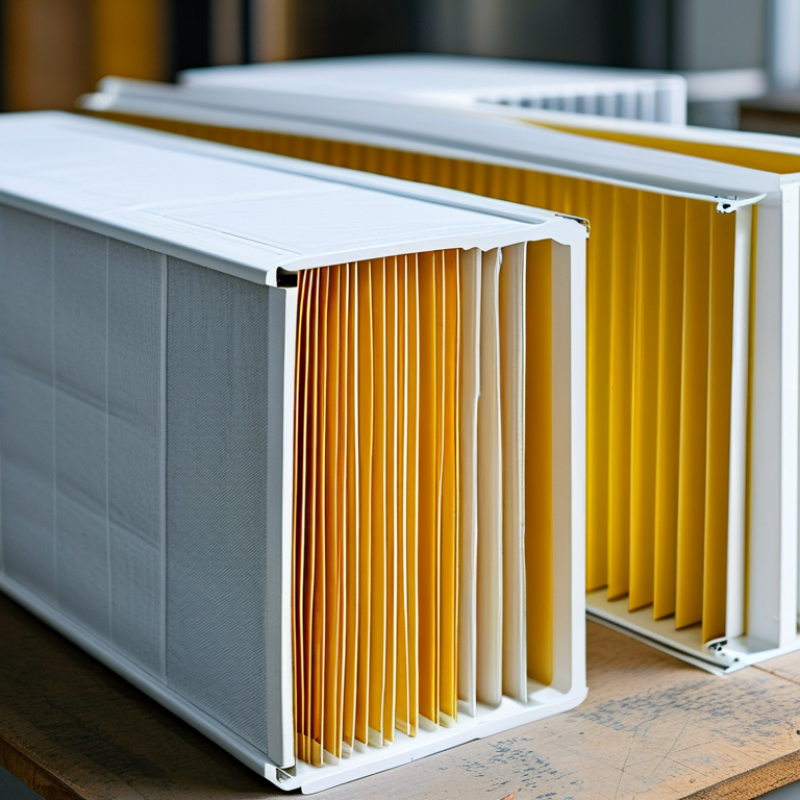
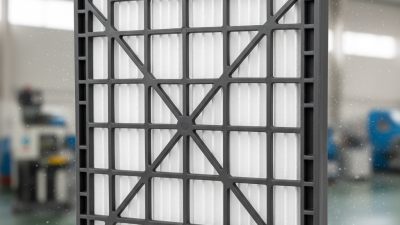
An air filter plastic frame is the rigid outer structure surrounding filter media. It supports the pleated material and keeps the filter stable during installation. The frame also helps maintain contact with the sealing surface. Without a precise frame, air may bypass the filter through small gaps.
Fit comes first. A few tenths of a millimeter can affect sealing performance. Corners should remain square, while ribs need enough strength to resist handling pressure. In practical assembly, installers often notice weak clips, warped edges, or rough surfaces before testing begins. Small details matter.
Material choice changes durability and cost. Polypropylene offers flexibility and moisture resistance. ABS can provide stronger impact performance, but it may cost more. The right choice depends on temperature, airflow, humidity, and intended service conditions. In production inspections, a frame may look acceptable yet fail after heat exposure. That risk deserves attention.
When comparing air filter plastic frame suppliers in China, request dimensional reports, material specifications, mold details, and sample approval records. Reliable manufacturers usually control wall thickness, injection temperature, and cooling time. They should also explain how they manage batch traceability and defective parts. A supplier with clear inspection steps is easier to evaluate. Still, documents are not everything. Check samples by measuring corners, mounting points, and sealing surfaces. A visually clean frame can hide uneven shrinkage. That is where careful testing becomes necessary.
| Evaluation Dimension | Typical Requirement or Benchmark | Why It Matters | Recommended Verification |
|---|---|---|---|
| Frame Function | A molded plastic perimeter frame that supports the filter media and maintains the sealing geometry. | The frame helps prevent media movement, air bypass, and deformation during installation and operation. | Review drawings, dimensional inspection reports, and sample-fit results with the matching filter element. |
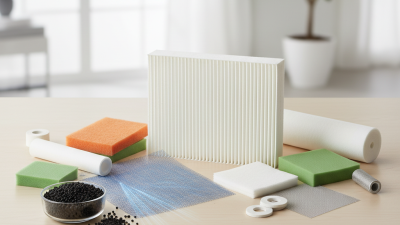
| Common Plastic Materials | ABS, polypropylene (PP), polystyrene (PS), and polyamide (PA) are commonly considered depending on temperature, strength, and chemical-resistance needs. | Material selection affects stiffness, impact resistance, dimensional stability, weight, and production cost. | Request the resin grade, technical data sheet, safety data sheet, and incoming material traceability records. |
| Dimensional Accuracy | Production tolerance should be defined on the approved drawing; many injection-molded plastic components use approximately ±0.10 to ±0.30 mm for controlled dimensions, depending on size and material. | Poor accuracy can cause installation problems, uneven gasket compression, or air leakage around the filter. | Check coordinate-measuring-machine reports, go/no-go gauges, flatness, squareness, and key interface dimensions. |
| Operating Temperature | The frame material must be selected according to the actual application temperature; general-purpose plastics are not automatically suitable for high-temperature filtration. | Excessive heat can cause softening, warpage, shrinkage, or loss of sealing pressure. | Compare the resin datasheet temperature ratings with the operating profile and perform heat-aging or thermal-cycling tests when required. |
| Flammability Performance | For applications requiring flame classification, the selected resin should have a documented rating such as UL 94 V-0, V-1, or V-2 at the specified thickness. | Fire performance can be important in commercial buildings, transportation, electronics, and industrial ventilation systems. | Verify the exact resin grade, specimen thickness, test report, and certificate scope rather than relying on a generic material name. |
| Chemical and Moisture Resistance | Resistance should be assessed against cleaning agents, disinfectants, oils, humidity, and any process chemicals used at the installation site. | Chemical attack or moisture absorption may lead to cracking, swelling, embrittlement, or loss of dimensional stability. | Conduct compatibility testing using the actual chemical concentration, exposure time, temperature, and cleaning procedure. |
| Air-Tight Sealing | The frame should provide a continuous, uniform sealing surface compatible with the selected gasket, sealant, or housing design. | Even a high-efficiency filter can underperform if air bypasses the media through gaps around the frame. | Use a complete filter assembly for leakage, pressure-drop, gasket-compression, and housing-fit testing. |
| Filter Classification Support | Air-cleaning performance is normally evaluated at the complete filter level under standards such as ISO 16890 for general ventilation filters or EN 1822 for high-efficiency filters. | A plastic frame alone does not determine the filter’s ePM, E, or H classification; the full assembly and its sealing system are critical. | Request complete-filter test reports that identify the media, frame, gasket, airflow, pressure drop, and test standard. |
| Manufacturing Process | Injection molding is commonly used for repeatable plastic frames; tooling should include suitable cooling, ejection, and warpage-control provisions. | Stable molding conditions improve repeatability, surface quality, cycle time, and long-term supply consistency. | Audit process controls, mold-maintenance records, first-article inspection, and statistical process-control data. |
| Sustainability and Compliance | Material documentation may include RoHS and REACH declarations where required by the destination market; recycled content should be specified and controlled if used. | Compliance documentation supports import, customer approval, and environmental reporting requirements. | Verify declarations against the exact resin grade, additives, colorants, and production batch. |
| Supplier Qualification | A qualified supplier should demonstrate controlled tooling, documented inspection, material traceability, corrective-action procedures, and stable production capacity. | Supplier capability affects product consistency, lead time, engineering support, and the risk of unapproved material or design changes. | Evaluate samples, quality records, production controls, packaging standards, change-notification procedures, and third-party audit results. |