For global buyers, selecting an Air Filtration Media supplier means looking beyond price sheets. Fiber type, pore structure, and web strength affect particle capture and pressure drop. Small details matter. A roll may look uniform under warehouse lighting yet vary in thickness across its width.
Air-quality researcher Dr. Richard L. Corsi has offered a concise reminder: “Clean air is a human right.” That idea gives procurement a human context: media performance affects occupants, operators, and maintenance teams—not just laboratory charts. Still, one quote cannot choose a supplier. Compare independently tested efficiency, pressure-drop data, dust-holding capacity, material consistency, production capacity, and quality controls. Ask how results were measured, and request current technical sheets instead of relying on broad claims. For international orders, confirm sample availability, lead times, packaging, and communication across time zones. Low initial costs can prove misleading if rolls arrive late or perform differently on the production line.
This guide introduces ten Air Filtration Media suppliers for global buyers, focusing on product range, technical support, and export readiness. It is a starting point, not a universal ranking. Supplier capabilities change, and public data may be incomplete. That deserves a second look. Match each candidate to the filter design, operating conditions, and target market. Where available, review test reports and request a production sample. Practical verification beats polished catalog language.
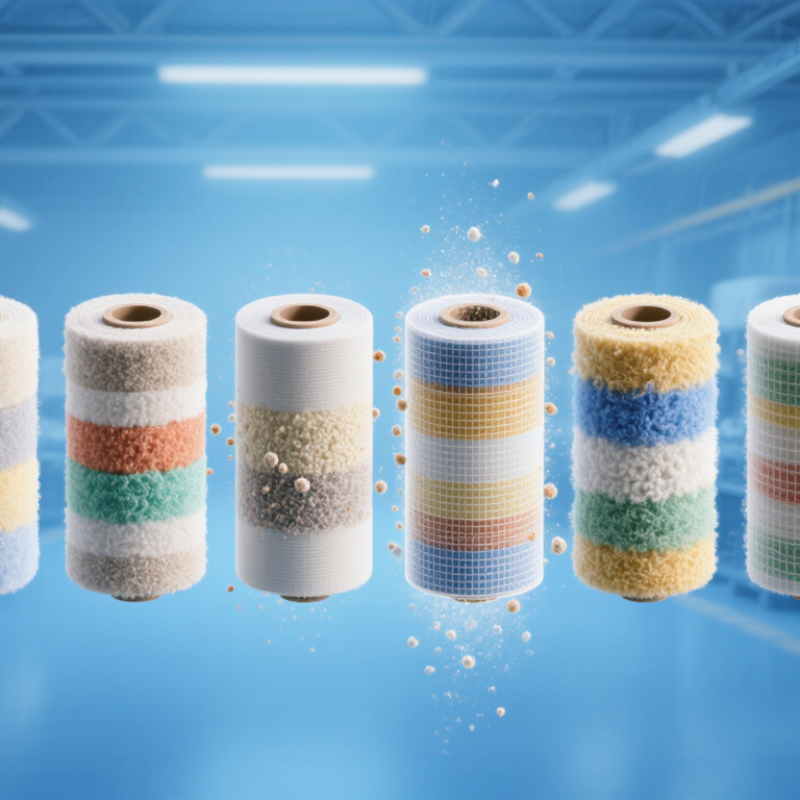
Air filtration media is the material that captures particles as air passes through a filter. It may use a web of synthetic or glass fibers, a pleated sheet, or a layered structure. Dust, pollen, and other airborne particles collide with fibers or follow airflow into narrow spaces, where they become trapped. Very small particles can also be captured through diffusion. It is not magic. Fiber diameter, spacing, media depth, and airflow all affect performance.
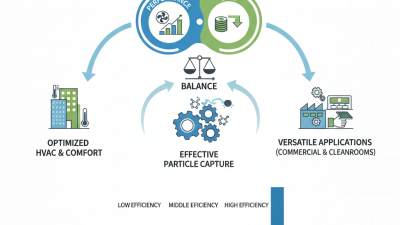
A denser structure can capture more particles, but it may also make air harder to move. That added resistance, called pressure drop, can increase the load on a ventilation system. Some media use an electrostatic charge to attract particles while keeping the structure relatively open; performance can change as the media collects dust. Small details matter. In practice, buyers should compare test data for particle efficiency and pressure drop under stated conditions, not rely on a single headline figure. A filter that performs well in a laboratory may behave differently in a humid, dusty facility or at higher airflow. Media selection is therefore a balance, and the operating conditions are easy to underestimate.
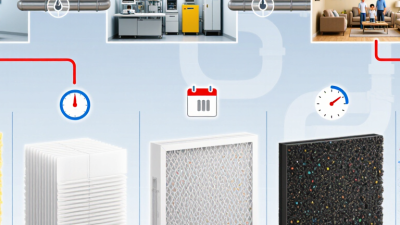
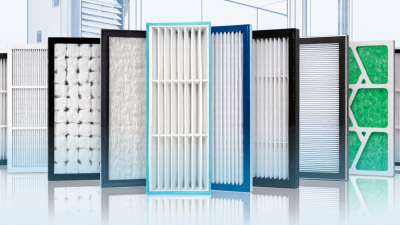
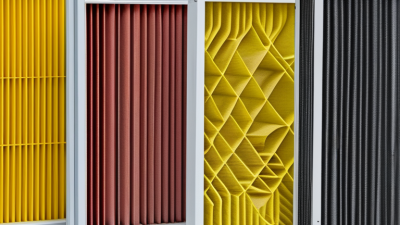
Air filtration media differ in how they capture particles and handle airflow. Fiberglass and synthetic fiber mats are common in panel filters. Their layered strands trap larger dust particles while keeping resistance relatively low. Pleated cellulose or polyester media provide more surface area in a compact frame. As dust collects, however, pressure drop rises. A clean-looking filter may still be nearing its service limit.
Fine-fiber and membrane media can capture smaller particles, making them useful where higher efficiency is needed. Performance depends on fiber structure, pleat design, and the seal around the filter—not just the material name. Activated carbon media target certain gases and odors through adsorption. They do not replace particle filters. Metal mesh is durable and often washable, but it generally works best as a coarse prefilter. Each has trade-offs.
Buyers should match media to the actual air, airflow, humidity, and maintenance schedule. For example, a dusty workshop may load a fine medium quickly, while a damp environment can challenge some materials. Ask for test data and confirm the test method, efficiency rating, and recommended operating conditions. Testing matters. In practice, selection is rarely perfect on paper; real operating data may reveal that a seemingly efficient medium needs more frequent replacement than expected.
Air filtration media are selected to capture particles across different size ranges. The chart shows the nominal upper aerodynamic diameter used to define each particle fraction—not filter efficiency.
PM10: particles up to 10 μm; PM2.5: particles up to 2.5 μm; PM1: particles up to 1 μm. Actual filtration performance depends on the media, filter design, and test method.
When comparing air filtration media suppliers, look beyond quoted price and catalog efficiency. Ask for test reports tied to the exact media grade, basis weight, and production site. For general ventilation, ISO 16890 data can help compare performance, while high-efficiency applications may require testing under EN 1822. The test method matters. Check whether results cover pressure drop, particle capture, dust-holding capacity, and conditions relevant to your operating environment.
Request a sample roll and inspect its width, thickness, fiber consistency, and packaging after transit. Then run it in your own process; material that performs well in a laboratory may behave differently during pleating or assembly. Ask how the supplier controls batch variation, records raw-material changes, and handles out-of-specification lots. Evidence matters. Review quality-system certificates, but verify their scope and expiry rather than treating a logo as proof. For global sourcing, compare lead times, minimum order quantities, export packaging, and backup production capacity. Confirm that technical documents and change notices arrive in a language your team can use. A supplier may answer quickly before an order and slowly afterward; test communication with a detailed question. No scorecard captures every risk, so document assumptions and revisit them after the first shipment.
Global buyers comparing the top 10 air filtration media suppliers should look beyond catalog breadth. Media performance depends on fiber type, basis weight, pore structure, and consistency between production lots. Request test data for pressure drop, particle efficiency, dust-holding capacity, and operating temperature. Small details matter.
Compare suppliers using the same test methods and clearly defined conditions. Ask for traceable lot reports, sample rolls, and details about quality checks during production. A certificate alone is not enough. Check whether the proposed media suits the filter design, airflow, and dust load in your application. One specification rarely tells the whole story.
Supply reliability deserves equal attention. Confirm minimum order quantities, lead times, roll widths, packaging, and support across your destination markets. A small trial can reveal handling issues, uneven coating, or unexpected pressure changes before larger orders begin. Still, one trial may not represent every production run. That uncertainty is worth discussing openly with each supplier.
A supplier’s catalogue is only a starting point. Ask for recent, independently verified test reports for the exact media grade you plan to buy. ASHRAE Standard 52.2 measures particle-size efficiency across 0.3–10 micrometres and assigns a MERV rating. ISO 16890 reports performance in ePM1, ePM2.5, and ePM10 categories. These results help compare products, but ratings alone do not show how media performs in your filter design.
Check pressure drop alongside efficiency. A high capture rate may increase fan energy use if airflow resistance rises. Request data at your intended face velocity, plus dust-holding capacity, basis weight, thickness, and performance after humidity exposure. Then test samples in your own pleat geometry. Small differences matter. A roll that looks uniform can still vary across its width. Ask suppliers how they control batch consistency, retain samples, and investigate out-of-spec results.
Compare production capability as carefully as laboratory figures. Review available roll widths, minimum order quantities, lead times, packaging, and backup capacity. Ask for a sample certificate and traceability records before placing a large order. Keep the questions practical: Can the supplier repeat the same pressure drop next month? Can it explain a change? A polished report is useful, but it is not proof of reliable delivery. I would also check references from buyers using similar equipment; that step takes time, and it can reveal gaps the data sheet misses.
Anonymous supplier comparison template—not a verified ranking or a set of supplier-specific claims. Replace each entry with a supplier under consideration and confirm all capabilities using current documents and samples.
| Candidate | Media Scope to Confirm | Efficiency Evidence to Request | Test Standards to Check | Operational Data to Compare | Quality and Compliance Evidence | Commercial and Supply Checks | Status |
|---|---|---|---|---|---|---|---|
| Supplier 01 | General ventilation media; confirm grades, formats, and backing options. | Request efficiency classification and test report for the exact media grade. | ISO 16890 or ASHRAE 52.2, as applicable to the product and market. | Initial pressure drop, airflow conditions, dust-loading data, and test method. | Request current quality-system certificates, scope, and traceability records. | Confirm MOQ, lead time, sample availability, packaging, and delivery terms. | To be verified |
| Supplier 02 | Fine-particle filtration media; confirm target application and grade range. | Request fractional efficiency results and clearly stated test conditions. | ISO 16890 or ASHRAE 52.2, as applicable to the product and market. | Compare pressure drop, airflow, media area, and usable operating conditions. | Check lot identification, change-control process, and certificate validity. | Confirm production capacity, forecast flexibility, and export documentation. | To be verified |
| Supplier 03 | High-efficiency or cleanroom media; confirm whether complete-element testing is available. | Request efficiency, penetration, and uniformity data for the specified product. | ISO 29463 or EN 1822, where applicable to the product classification. | Review pressure drop, rated airflow, test aerosol, and scan or leak-test method. | Request product-specific reports, calibration details, and batch traceability. | Check technical support, sample lead time, and qualification assistance. | To be verified |
| Supplier 04 | Synthetic-fiber media; confirm fiber composition, web construction, and available finishes. | Request grade-specific efficiency data and details of any electrostatic treatment. | ISO 16890 or ASHRAE 52.2, as applicable to the product and market. | Compare thickness, basis weight, permeability, pressure drop, and mechanical strength. | Ask for material declarations and evidence supporting stated product properties. | Confirm roll dimensions, winding direction, packaging, and repeat-order consistency. | To be verified |
| Supplier 05 | Glass-fiber media; confirm grade, binder details, and intended operating conditions. | Request efficiency and pressure-drop reports for the exact construction offered. | ISO 29463 or EN 1822 for applicable high-efficiency products; verify scope. | Review airflow, pressure drop, temperature limits, and handling requirements. | Confirm safety documentation, product identification, and inspection records. | Check safe transport packaging, storage guidance, and damage-claim process. | To be verified |
| Supplier 06 | Activated-carbon or other gas-phase media; confirm adsorbent type and format. | Request contaminant-specific test data; particle-efficiency ratings alone are insufficient. | Request the relevant application-specific method and full test conditions. | Compare target contaminant, capacity, contact conditions, humidity, and service-life basis. | Ask for adsorbent content, safety data, and evidence behind performance claims. | Confirm shelf life, storage conditions, replenishment availability, and shipping limits. | To be verified |
| Supplier 07 | Washable or reusable media; confirm cleaning method and intended reuse conditions. | Request performance data before and after cleaning, with the cleaning protocol specified. | Use an applicable test method and confirm that test conditions match the claim. | Review pressure drop, cleanability, dimensional stability, and cycle-life evidence. | Request care instructions, material declarations, and documented test results. | Compare total cost over the expected service life, not purchase price alone. | To be verified |
| Supplier 08 | Coated, laminated, or specialty media; confirm coating purpose and construction details. | Request performance evidence for the finished media, not just its base material. | Select the applicable filtration or application test method and verify its scope. | Compare permeability, pressure drop, adhesion, durability, and application limits. | Check coating consistency, restricted-substance documentation, and change control. | Confirm customization capability, tooling needs, MOQ, and approval lead time. | To be verified |
| Supplier 09 | Automotive or mobile-equipment media; confirm the target component and duty cycle. | Request application-specific efficiency and dust-loading results from relevant test conditions. | Confirm the customer or industry test method required for the target application. | Review airflow resistance, dust capacity, vibration suitability, and environmental limits. | Request process-control evidence, traceability, and change-notification procedures. | Assess engineering support, validation samples, and production ramp-up readiness. | To be verified |
| Supplier 10 | Custom or multi-layer media; confirm layer structure, bonding, and conversion options. | Request complete-media data and independent verification where appropriate. | Use the standard applicable to the final product and destination market. | Compare pressure drop, efficiency, dimensions, strength, and application fit. | Verify audit scope, nonconformance handling, corrective actions, and document control. | Evaluate landed cost, supply continuity, backup capacity, and communication response time. | To be verified |
Buyer note: ISO 16890 and ASHRAE 52.2 address general ventilation filter performance using different classification approaches. ISO 29463 and EN 1822 apply to high-efficiency particulate air filters. Confirm the current standard edition, product scope, and test conditions before comparing results across suppliers.