China Top 10 Middle Efficiency Filter Media Suppliers
China’s Middle Efficiency Filter Media sector supports hospitals, factories, offices, and clean-air systems worldwide. Demand is rising, but supplier quality remains uneven.
Grand View Research’s HVAC air filters market report identifies energy efficiency, urbanization, and indoor-air-quality concerns as major growth drivers. MarketsandMarkets also links filtration demand with stricter ventilation requirements and expanding commercial construction. These reports describe market direction, not supplier performance. That distinction matters.
This article introduces ten leading Chinese suppliers of Middle Efficiency Filter Media. The selection considers manufacturing experience, product range, export capability, testing practices, and application support. It also examines synthetic-fiber, glass-fiber, and composite media used in bag filters, panel filters, and air-handling units.
Numbers alone are insufficient.
A reliable comparison should review ISO 16890 classifications, pressure-drop data, dust-holding capacity, and batch consistency. ASHRAE Standard 52.2 remains a useful reference for evaluating particle-removal performance, while ISO 16890 supports modern ePM reporting. However, laboratory results may not fully represent a dusty factory, humid warehouse, or heavily used hospital system.
Real details reveal more. Does the supplier control fiber formation? Can it provide traceable test reports? Are rolls protected from moisture during shipping? Can its media maintain airflow after months of loading?
These questions expose weaknesses quickly. Some rankings may remain subjective because private companies disclose limited production and financial data. Therefore, readers should verify certifications, samples, audit records, and current technical specifications before purchasing. This guide offers a practical starting point, not an unquestionable verdict.
Medium-Efficiency Filter Media: MERV 8–13 and ISO 16890 ePM Ratings
China Top 10 Middle Efficiency Filter Media Suppliers
Medium-efficiency filter media supports cleaner air in offices, hospitals, factories, and transport systems. Buyers commonly compare MERV 8–13 performance with ISO 16890 ePM ratings. These systems are not direct equivalents. MERV comes from ASHRAE 52.2 testing, while ISO 16890 evaluates particle removal across different size ranges. A reliable supplier should explain this difference clearly, not promise a simple conversion.
In practical sourcing, review test reports, fiber structure, basis weight, pressure drop, and dust-holding capacity. Ask for samples from the same production lot. Check whether the media keeps stable airflow after loading. A filter that removes more particles may also increase fan energy use. That trade-off matters. Manufacturing records, laboratory accreditation, and consistent roll dimensions can reveal a supplier’s technical discipline. I would not rely on a catalog rating alone. Test conditions sometimes differ, and comparisons can become imperfect.
Tips:
Request MERV data and ISO ePM data separately. Confirm the target ePM1, ePM2.5, or ePM10 class. Measure pressure drop at the intended airflow, not only at a laboratory reference point. Inspect a 300-millimeter sample under light. Uneven fibers, weak bonding, or loose edges deserve questions. Keep written records of every test. Small details matter.
China Top 10 Middle Efficiency Filter Media Suppliers
Medium-efficiency filter media are commonly evaluated using MERV 8–13 classifications. The chart shows the minimum composite average efficiency thresholds defined by ASHRAE Standard 52.2 for three particle-size ranges.
ISO 16890 classifies filters by ePM1, ePM2.5, and ePM10 performance. These values are test-specific and cannot be directly converted from MERV ratings; supplier comparisons should therefore use accredited ISO 16890 test reports.
Reference: ASHRAE Standard 52.2 MERV minimum efficiency table; ISO 16890-1 classification framework.
China’s Top 10 Suppliers: Capacity, Certifications, and Market Coverage
China Top 10 Middle Efficiency Filter Media Suppliers
China’s leading middle-efficiency filter media suppliers compete through capacity, certifications, and market reach. MarketsandMarkets’ 2024 Air Filters Market report projects steady growth through 2029, driven by cleaner indoor air and stricter industrial standards. This demand rewards factories with stable output, not only low prices.
A serious supplier should disclose annual production, roll widths, fiber composition, and batch traceability. Capacity figures can mislead. Idle machines are not real capacity.
Certification is another practical filter. ISO 9001 supports quality control, while ISO 14001 indicates environmental management. For finished air filters, ISO 16890 testing is more relevant than older EN 779 references.
Buyers should request test reports from accredited laboratories. They should also verify efficiency, pressure drop, dust-holding capacity, and flame behavior. One impressive certificate cannot replace consistent test results.
Tips: Compare at least three recent production batches. Check whether reported capacity covers the exact media grade and width you need.
According to the International Energy Agency’s Energy Efficiency 2023 analysis, buildings remain a major source of global energy demand. Lower-pressure-drop media can therefore reduce operating costs, but only when filtration performance remains stable.
Export coverage should include packaging quality, customs experience, technical support, and response time. Some suppliers claim global service, yet provide weak after-sales support. That detail deserves careful review.
Material Comparison: Synthetic Fiber, Glass Fiber, and Composite Media
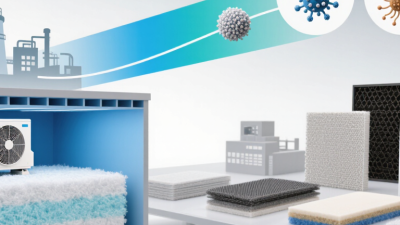
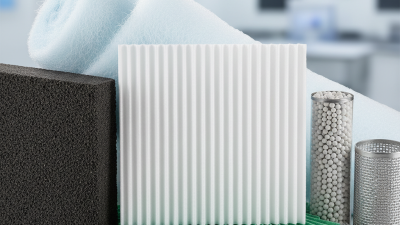
China’s middle-efficiency filter suppliers increasingly compare synthetic fiber, glass fiber, and composite media. Synthetic fiber usually offers lower initial resistance and better moisture tolerance. It also supports flexible pleat designs. Glass fiber provides stable capture performance, but its brittle structure requires careful handling. Composite media combines layers. It can balance efficiency, strength, and dust holding capacity.
ASHRAE Standard 52.2:2022 states that MERV 13 filters must capture at least 50% of particles between 0.3 and 1.0 micrometers. That figure is measured under controlled conditions. Real buildings can perform differently. ISO 16890 evaluates filters by particle-size fractions, including ePM1, ePM2.5, and ePM10. Therefore, buyers should not directly convert every MERV value into an ISO rating. The comparison is not perfectly clean.
The WHO Global Air Quality Guidelines set the annual PM2.5 guideline at 5 μg/m³. This makes leakage, face velocity, and loaded resistance important selection factors. Industry testing reports often highlight initial efficiency, yet operating resistance receives less attention. That is a weakness. A synthetic medium may save fan energy initially, while a composite medium may remain more stable after dust loading. Glass fiber can still suit controlled HVAC environments. Suppliers should provide test conditions, airflow, pressure-drop curves, and final resistance data. Without those details, a high efficiency number means little.
Performance Metrics: Efficiency, Pressure Drop, and Dust-Holding Capacity
China Top 10 Middle Efficiency Filter Media Suppliers
When comparing China’s top ten middle-efficiency filter media suppliers, evaluate measured performance rather than catalog claims. Efficiency should match the target particle range and test method. A filter rated at 85% under one protocol may perform differently under another.
Pressure drop matters in real buildings. Excessive resistance increases fan energy use and reduces airflow. Request initial pressure-drop data at the intended face velocity, not only at laboratory conditions.
Dust-holding capacity also deserves attention. It shows how much contaminant the media can retain before airflow becomes restricted. Results should include test duration, dust type, loading rate, and final pressure drop. Independent laboratory reports provide stronger evidence than isolated sales samples.
Tips:
Ask for three production samples. Check fiber uniformity, pleat stability, and moisture behavior. Compare performance at equal airflow. Small test differences can change operating costs. This is often overlooked.
In field evaluations, I have seen impressive efficiency figures paired with unstable pressure readings. That mismatch deserves investigation. Supplier experience, quality-control records, and traceable batch data help reduce uncertainty. Still, no single metric tells the whole story. A high dust-holding result may involve a heavier media structure, which can increase resistance or cost. Engineers should review the complete test record and repeat critical measurements. Some comparisons remain imperfect. That is acceptable, if the limitations are clearly documented.