Leave Your Message
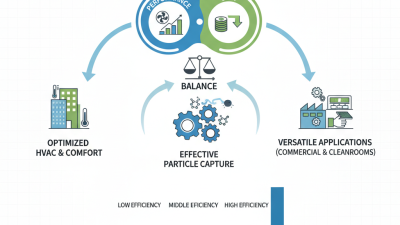
As air quality standards evolve in 2026, Middle Efficiency Filter Media remains important for commercial buildings, workshops, hospitals, and modern homes. These materials capture airborne particles without creating the pressure drop associated with high-efficiency filters. That balance matters.
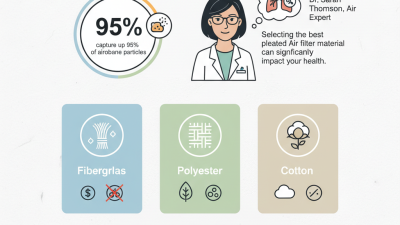
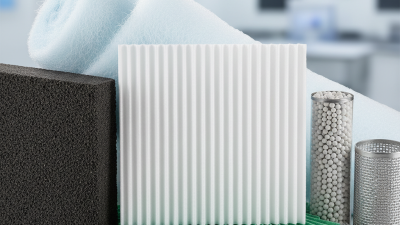
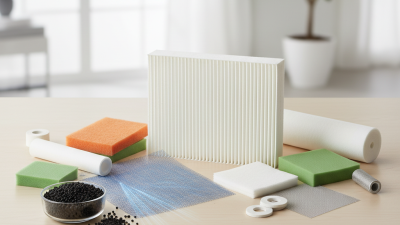
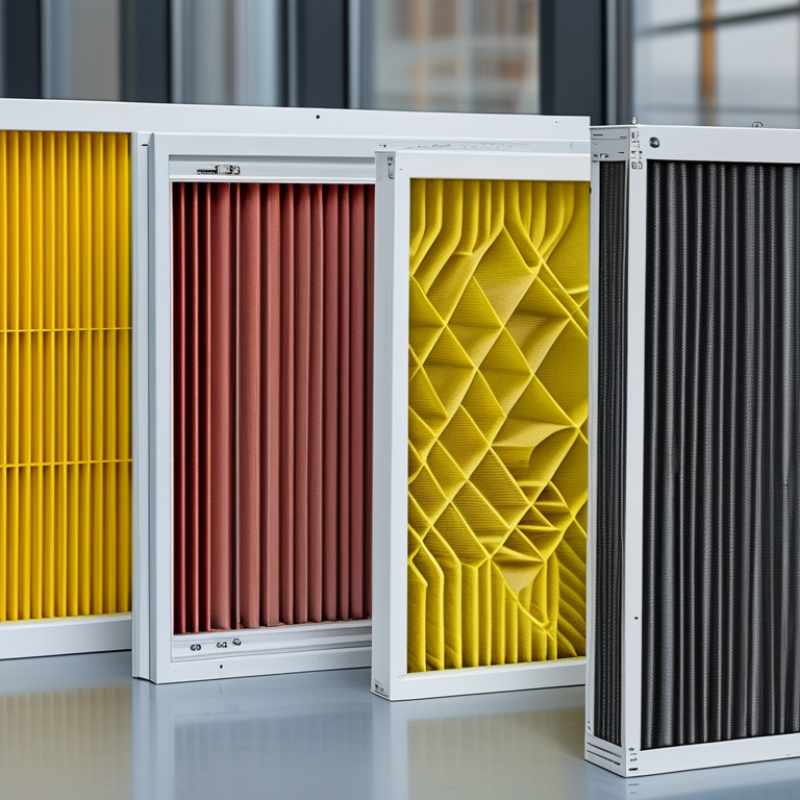
Common options include synthetic fiber, fiberglass, melt-blown polypropylene, pleated polyester, and glass fiber media. Each type behaves differently inside a filter housing. A deep-pleated synthetic filter may hold more dust, while a fiberglass panel can offer lower initial resistance at a lower cost. Some glass fiber media provide stable performance in demanding ventilation systems. Washable media may appear economical, but cleaning quality and material aging require careful attention.
Real performance depends on more than the media itself. Air velocity, humidity, sealing, dust loading, and replacement schedules can change results. A filter rated well in laboratory conditions may perform poorly around a loose frame. Small gaps matter.
In 2026, buyers should compare efficiency ratings, pressure-drop data, service life, fire performance, and environmental impact. Regional standards may use different testing methods, so rating numbers should not be compared blindly. Manufacturer documentation and independent test reports provide stronger evidence than marketing claims. Still, no single media suits every building. A dusty warehouse, a school classroom, and a clean office need different decisions.
The best choice is practical.
This guide examines the leading Middle Efficiency Filter Media types, their operating strengths, limitations, and suitable applications. It also considers a difficult question: can longer service life justify higher manufacturing impacts? The answer is not always obvious.
2026 Top Types of Medium-Efficiency Filter Media
What Defines a Medium-Efficiency Filter Media?
Medium-efficiency filter media captures common airborne particles without creating excessive airflow resistance. Its performance depends on fiber structure, thickness, pleat depth, and air velocity. Classification is not universal. Testing methods and regional standards can produce different ratings.
Common media types include synthetic fiber, fiberglass, pleated cellulose, and electrostatic blends. Synthetic media often offers stable performance in humid spaces. Fiberglass can provide economical particle capture, but it may hold less dust. Pleated media creates more surface area inside a compact frame. In real installations, poor sealing can reduce effectiveness sharply. A well-rated filter cannot compensate for bypass air.
Experienced technicians examine pressure drop with a manometer, not only the printed efficiency value. They also check dust loading, fan capacity, replacement access, and indoor particle sources. A filter that performs well in a laboratory may behave differently near a busy entrance. That difference matters.
Tips: Compare efficiency and pressure drop together. Inspect the gasket and frame for visible gaps. Replace media when airflow falls noticeably, not only when it looks dirty. Keep records of operating hours and pressure readings. This simple habit improves maintenance decisions, although it is easy to overlook during busy seasons.
| Filter Media Type | Typical Construction | Typical Efficiency Classification* | Representative Initial Pressure Drop | Main Particle-Control Mechanism | Common Applications | Key Advantages | Main Limitations |
|---|---|---|---|---|---|---|---|
| Fiberglass Depth Media | Layered glass fibers, usually formed into a progressively dense disposable panel | Generally MERV 5–8; commonly used at the lower end of medium-efficiency filtration | Approximately 25–100 Pa at the manufacturer’s rated airflow | Inertial impaction, interception and depth loading | Pre-filtration, commercial HVAC systems, warehouses and general ventilation | Low cost, low resistance and good dust-holding capacity | Lower fine-particle capture than pleated or electret media; fibers can be more fragile |
| Spunbond Synthetic Media | Continuous polyester or polypropylene fibers, supplied as flat or lightly pleated media | Typically MERV 8–13, depending on fiber diameter, basis weight and electret treatment | Approximately 50–150 Pa at the manufacturer’s rated airflow | Interception, impaction and, when charged, electrostatic attraction | Office buildings, schools, retail facilities and air-handling units | Moisture resistance, consistent structure and broad design flexibility | Efficiency and pressure drop vary significantly among fiber structures and charge treatments |
| Pleated Cellulose/Synthetic Blend | Pleated blend of cellulose and synthetic fibers supported by a wire or polymer backing | Commonly MERV 8–11; some designs reach MERV 13 | Approximately 75–175 Pa at the manufacturer’s rated airflow | Interception, impaction and depth loading across the pleat pack | Residential and light-commercial HVAC, return-air systems and packaged units | Large effective surface area, widely available and balanced dust-holding performance | Can create higher airflow resistance when heavily loaded or tightly pleated |
| Electret Synthetic Media | Fine synthetic fibers with a persistent electrostatic charge, usually arranged in a pleated format | Often MERV 8–13, with relatively efficient submicron particle capture at moderate resistance | Approximately 75–200 Pa at the manufacturer’s rated airflow | Electrostatic attraction combined with mechanical filtration | Indoor-air-quality upgrades, offices, healthcare support areas and comfort HVAC | Improved fine-particle efficiency without relying only on dense fiber packing | Performance may change with dust loading, humidity, aging and exposure to certain contaminants |
| Meltblown Polypropylene Media | Microfibers formed by high-velocity air attenuation and layered into a nonwoven web | Typically MERV 8–13 when engineered for HVAC applications; higher ratings are also possible in specialized designs | Approximately 75–225 Pa at the manufacturer’s rated airflow | Interception, diffusion and electrostatic attraction when charged | Pleated HVAC filters, portable air cleaners and pre-filter layers | Fine fiber structure, lightweight construction and good moisture resistance | Fine fibers can increase pressure drop; mechanical strength may require a support layer |
| Nanofiber-Coated Composite Media | A thin nanofiber layer applied to a stronger cellulose or synthetic substrate | Commonly MERV 11–13; classification depends on the complete filter design and test results | Approximately 100–250 Pa at the manufacturer’s rated airflow | Surface filtration, interception, diffusion and electrostatic effects when present | High-quality commercial HVAC, air-cleaning equipment and applications requiring finer particle control | High surface area, strong fine-particle capture and potentially good dust-release characteristics | Higher material cost and greater sensitivity to pleat geometry, support and manufacturing quality |
What defines a medium-efficiency filter media? Medium-efficiency media generally provide a practical balance between particle removal, airflow resistance, service life and operating cost. In HVAC practice, the term often refers broadly to filters around MERV 8–13, although the exact boundary depends on the application and the testing system used.
*The efficiency and pressure-drop figures are representative industry ranges, not guaranteed product specifications. Actual performance depends on media weight, fiber diameter, pleat density, face velocity, filter dimensions, dust loading and laboratory test conditions. MERV ratings should be confirmed through testing under ASHRAE Standard 52.2 or the applicable regional standard.