Leave Your Message

Best Wholesale High Efficiency Air Filter Paper in 2026?

Choosing the Best Wholesale High Efficiency Air Filter Paper in 2026 takes more than comparing a quoted price. Buyers need to examine filtration efficiency, pressure drop, airflow, thickness, and mechanical strength together. A high-efficiency sheet may capture fine particles, yet restrict airflow when its resistance is too high. That trade-off matters. The right specification depends on the finished filter, its operating conditions, and the test method used to verify performance.

Dr. Richard Corsi, an indoor-air-quality researcher, is often associated with this practical reminder: “The best air cleaner is the one that is running.” For wholesale buyers, the lesson is that media performance must translate into dependable use. Ask suppliers for current test reports, batch consistency data, and clear details about fiber composition and test conditions. Compare samples in the intended filter design, not just on a product sheet. Small details count. Pleat stability, surface uniformity, and handling strength can affect manufacturing and service life. A low unit price can look attractive, but it may not reflect the cost of rejects or premature replacement. There is no universal winner. I would also question any claim of “best” that lacks comparable test data; even a careful comparison can miss real-world variation. This guide outlines practical criteria for assessing Wholesale High Efficiency Air Filter Paper in 2026, while keeping supplier claims and application needs in view.
Best Wholesale High Efficiency Air Filter Paper in 2026?

What High-Efficiency Air Filter Paper Is and How It Works

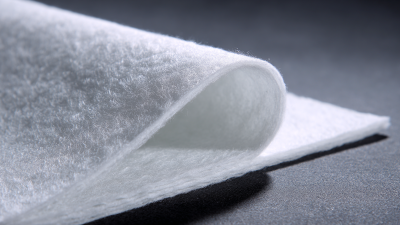
High-efficiency air filter paper is a porous filtration medium made from closely arranged fibers. Despite its name, it may contain cellulose, synthetic fibers, glass fibers, or a blend. The exact composition affects strength, moisture resistance, airflow, and particle capture. It is not a solid barrier. Air passes through its tiny, winding spaces while airborne particles interact with the fibers.

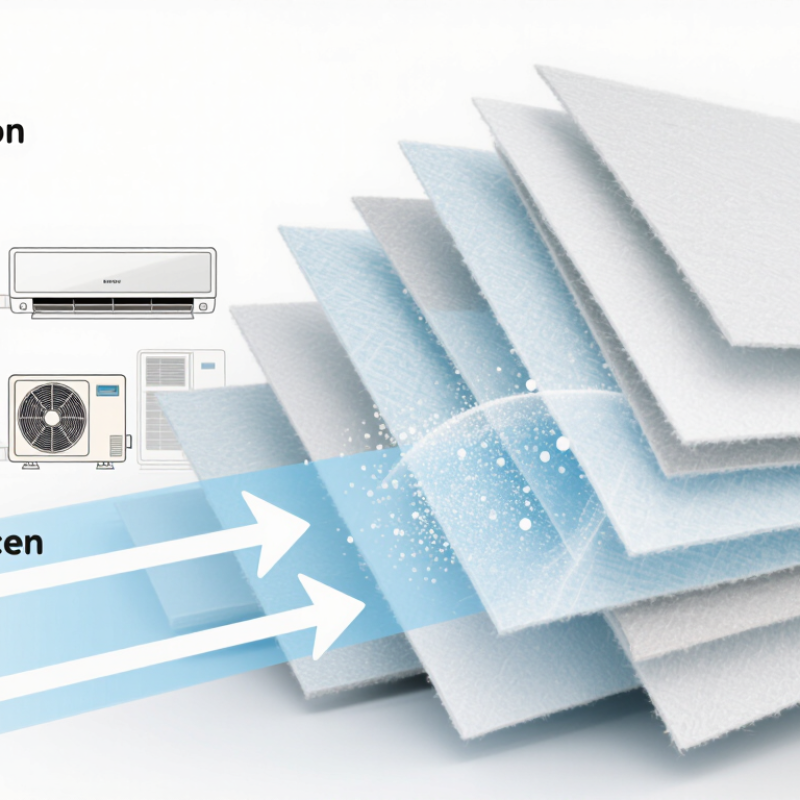
Several mechanisms work together. Larger particles may strike fibers directly, while smaller ones can drift from the airflow and become trapped. Some media also use electrostatic attraction. The result depends on particle size, airflow speed, media thickness, and filter construction. Slower airflow may improve capture, but can also increase resistance. That trade-off matters. A high-efficiency rating alone does not tell the whole story.

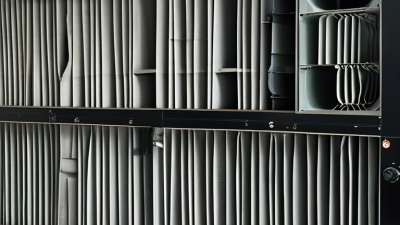
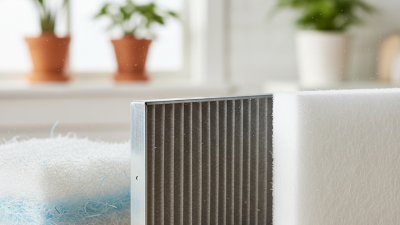
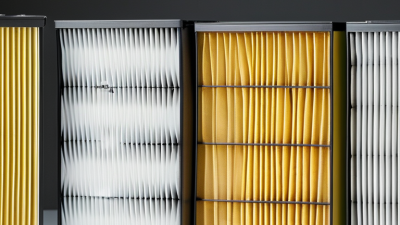
In practical use, pleated media provides more surface area in a compact frame. Dust collects across those folds, much like fine powder settling into a textured cloth. As particles build up, pressure drop can rise, reducing airflow if the filter is not changed when needed. Humidity and handling can also affect performance. “Paper” sounds simple, but the engineering is not. I would check test conditions and pressure-drop data before comparing products; ratings measured under different methods may not be directly comparable.
Which Performance Standards Define Filter Paper Quality in 2026

Best Wholesale High Efficiency Air Filter Paper in 2026?

Which Performance Standards Define Filter Paper Quality in 2026

In 2026, quality means more than a high particle-capture figure. Buyers should compare filtration efficiency with pressure drop, airflow, and dust-holding capacity. A dense sheet may capture fine particles, yet restrict airflow and raise energy use. Ask for test conditions, not just headline results. ISO 29463 and EN 1822 address high-efficiency filters, while ISO 16890 classifies general ventilation filters. These standards apply to filters and test methods; a paper grade alone does not prove finished-filter performance.

Check physical properties too. Basis weight, thickness, tensile strength, and pore consistency affect pleating and handling. Moisture resistance matters when media may face humid air. Request reports that identify the test method, sample conditioning, and product batch. Compare results from the same method. A strong laboratory result can still disappoint if production varies between rolls; this is easy to overlook.

Tips: Ask for pressure-drop curves at several airflow rates, plus efficiency and strength data. Inspect a sample roll for pinholes, uneven texture, or brittle edges. No single metric tells the whole story. Before ordering wholesale, confirm that the paper performs reliably in your intended filter design.

How Materials and Manufacturing Affect Filtration Efficiency

Best Wholesale High Efficiency Air Filter Paper in 2026?

Air filter paper performance starts with fiber choice. Fine glass fibers can capture small particles, while synthetic meltblown layers may use electrostatic charge to improve capture without adding much resistance. But the material alone tells only part of the story. In ASHRAE Standard 52.2-2017, MERV 13 filters must meet minimum average efficiencies of 50% for 0.3–1.0 μm particles, 85% for 1.0–3.0 μm, and 90% for 3.0–10 μm. Those figures come from a defined laboratory test, not a promise for every installation.

Manufacturing can shift the result. Uneven fiber distribution, weak pleat support, or gaps at the frame may let air bypass the media. Higher media density can improve particle capture, but it may also increase pressure drop and fan energy use. Ask suppliers for test data, pressure-drop readings, and lot-to-lot consistency—not just a headline efficiency. A sample should be tested in the intended airflow range. Small detail, big difference.

Tips: Compare media basis weight, thickness, and pressure drop. Check that reports identify the test method and particle sizes. If the filter performs well on paper but poorly in service, installation and seal quality deserve a second look. I’d treat any single efficiency number as incomplete.

Best Wholesale High Efficiency Air Filter Paper in 2026? — How Materials and Manufacturing Affect Filtration Efficiency

There is no single best filter-paper specification for every application. Compare media using the intended filter design, operating conditions, and test method. The material descriptions below are general characteristics, not guaranteed performance ratings.

Media construction Typical characteristics Manufacturing factors that matter Useful purchasing checks Performance verification
Cellulose fiber paper Paper-based media commonly used in general-purpose filtration. Performance depends on fiber structure, formulation, and any added treatments. Fiber uniformity, sheet formation, basis-weight consistency, binder distribution, and moisture control can affect strength, pressure drop, and repeatability. Request the basis-weight tolerance, thickness, tensile strength, moisture condition, and lot-to-lot quality records. Confirm compatibility with the intended humidity and operating environment. Ask for efficiency and pressure-drop results measured under a stated method and at a stated airflow or face velocity. Do not infer filter efficiency from paper weight alone.
Glass microfiber media Fine glass fibers can be used in high-efficiency filtration media. The finished medium may be fragile and may need support or a protective layer, depending on its design. Fiber distribution, web uniformity, binder content, curing, handling, and support-layer bonding can affect efficiency, resistance to airflow, and durability. Check media integrity, handling requirements, support-layer construction, and the supplier’s documented test conditions. Confirm that the finished filter—not only a media sample—meets the application requirement. For high-efficiency filters, request the applicable filter-classification test report and leak-test results for the finished element where required by the specification.
Synthetic fiber media Polymer fibers may be used alone or blended with other fibers. Moisture response, temperature limits, and mechanical behavior depend on the polymer and construction. Fiber diameter and distribution, bonding method, web uniformity, and electrostatic treatment (if used) can influence filtration and pressure drop. Identify the polymer composition and any electrostatic treatment. Request performance data after any conditioning or aging required for the intended service. Compare results from the same test method and conditioning procedure. Electrostatic media results may not be comparable when test conditions differ.
Composite or laminated media Combines layers or materials to balance filtration, strength, support, or other design needs. Results depend on the complete construction. Layer consistency, bonding quality, pleatability, edge integrity, and control of gaps or damage during converting are important. Request a layer description, construction tolerances, and traceability for each production lot. Confirm that converting and assembly do not damage the media. Use finished-filter test data where possible; media-only figures do not account for seals, frame, pleats, or bypass leakage.
Whole-filter efficiency and pressure drop Efficiency is meaningful only with its particle-size range, airflow, test aerosol, and test method stated. Pressure drop should also be reported at a specified airflow. Media selection, pleat geometry, effective area, seals, frame, and assembly quality all affect finished-filter performance. Compare like with like: same filter size, airflow, test method, conditioning, and reporting basis. Request both efficiency and pressure-drop data. ISO 16890 and ASHRAE Standard 52.2 are used to classify general ventilation air filters. ISO 29463 and EN 1822 address high-efficiency particulate air filters. Confirm the standard and scope required for the product.

Wholesale selection tip: Specify the target application, filter dimensions, airflow, allowable pressure drop, operating environment, test standard, required documentation, and production-lot tolerances before comparing quotations. Classification standards apply to filters within their scope; a media-only certificate is not a substitute for testing the assembled filter.

How to Compare Wholesale Suppliers and Product Specifications

Best Wholesale High Efficiency Air Filter Paper in 2026?
How to Compare Wholesale Suppliers and Product Specifications

A low price means little if each roll behaves differently. Ask suppliers for the test method behind every efficiency figure, not just a percentage. Compare pressure drop at a stated airflow, since resistance affects fan energy and filter performance. Check basis weight, thickness, air permeability, tensile strength, and moisture behavior. Numbers need context.

Request samples from the production grade, then test them under the same conditions. Look for fiber shedding, uneven formation, and weak edges during handling. Small flaws matter. One spec sheet never tells the whole story. Compare roll width, core size, winding quality, minimum order quantity, and lead time too. A cheaper quote can become costly when rolls need trimming or arrive late.

Ask how the supplier controls batch consistency and whether test reports identify the tested lot. Confirm packaging protects the paper from humidity and crushing during transit. Check replacement terms before ordering. A clear answer is useful; a vague one deserves follow-up. Keep your results beside the supplier’s data, because measurement setups can differ. It is tempting to treat a neat table as proof, but it is not. For a large order, request a trial batch and record how it handles on your own production line.

Best Wholesale High-Efficiency Air Filter Paper in 2026? Compare Supplier Specifications

EN 1822 efficiency thresholds provide a useful benchmark when evaluating filter-media suppliers. These figures classify finished filters at the most penetrating particle size (MPPS); they are not a guarantee of filter-paper performance on their own.

The vertical axis is zoomed to show the differences between class thresholds. When comparing wholesale offers, request test methods and data sheets for the finished filter, plus paper specifications such as basis weight, thickness, air permeability, pressure drop at a stated test velocity, tensile strength, and roll dimensions.

How to Select Filter Paper for Different Air Filtration Applications

Choosing filter paper starts with the air stream, not the catalog label. A home HVAC panel needs steady airflow and useful dust-holding capacity. A compact cabin filter may need finer particle capture in limited space. Clean manufacturing areas require consistent media and carefully verified efficiency. Match the target particle range to a tested rating, then check pressure drop at the intended airflow. Numbers need context.

Industrial dust collectors often need sturdy paper that tolerates pleating and repeated dust loading. Engine intake media faces different demands, including changing humidity and vibration. For each application, compare thickness, air permeability, tensile strength, and moisture resistance. Also confirm that the media suits the filter’s shape and sealing method. A strong paper can still perform poorly if pleats collapse or edges leak.

For wholesale orders, request technical data and samples from the same production grade. Test samples in the finished filter, not only as flat sheets; housing design changes airflow and pressure loss. Check consistency across batches before committing to volume. A common mistake is choosing the highest efficiency figure without considering airflow or service life. There is no perfect grade for every system, and a small pilot run may reveal details a specification sheet misses.