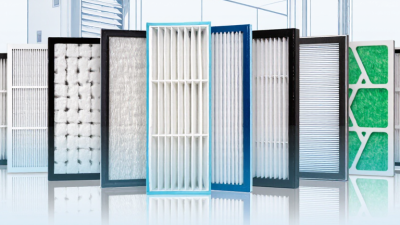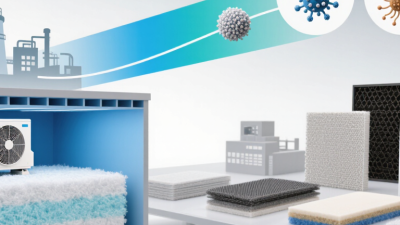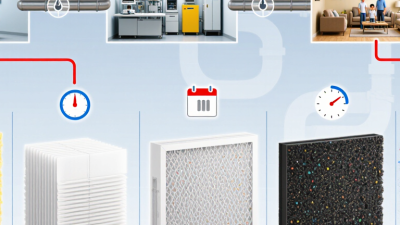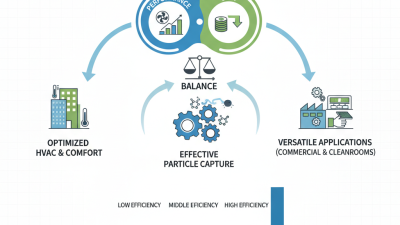
In 2026, global buyers are paying closer attention to Middle Efficiency Filter Media for commercial buildings, factories, hospitals, and transport facilities. These materials sit between basic pre-filtration and high-efficiency filtration. Their value depends on balanced performance, not simply a high initial rating. A reliable media should capture targeted particles while maintaining manageable airflow resistance and stable service life.
Experienced procurement teams examine more than fiber appearance. They compare pressure drop, dust-holding capacity, filtration efficiency, roll width, thickness, tensile strength, and bonding quality. A clean, evenly structured synthetic or glass-fiber layer may perform well, but laboratory results must support that impression. Small details matter. Poor edge sealing can shorten filter life. Weak packaging can damage media before installation.
Standards also require careful interpretation. ISO 16890 and ASHRAE 52.2 use different testing approaches, so their ratings should not be treated as direct equivalents. Buyers should request current test reports, sampling conditions, quality records, and traceable production information. Regional ventilation requirements may change the preferred specification. That part is often underestimated.
This guide examines practical options for international purchasing in 2026. It considers energy use, supply consistency, customization, installation conditions, and total operating cost. A low-priced roll may become expensive when replacement occurs too often. Conversely, an over-specified product can waste energy and budget. There is no universal winner. Site conditions decide. Product comparisons should remain transparent, technically grounded, and open to revision when field data challenges the original choice.

In 2026, middle-efficiency filter media describes a practical performance range, not one universal grade. Buyers may see classifications based on ISO 16890, EN 779 legacy terms, or MERV values. These systems are not directly interchangeable. The real meaning depends on particle size, test method, airflow, and installation conditions. A filter rated for coarse dust may perform poorly against fine airborne particles. This distinction matters in offices, schools, workshops, and light industrial spaces.
Common media include synthetic fibers, glass fibers, and blended structures. Synthetic media often resist moisture and physical damage during transport. Glass fiber media can provide stable filtration, but handling requires care. Some media use an electrostatic effect to improve particle capture. That effect may weaken with dust loading, humidity, or cleaning. It sounds efficient on paper. Field performance can differ.
A responsible buyer should compare initial pressure drop, dust-holding capacity, face velocity, and replacement intervals. Ask for independent test data, not only a sales table. Check whether the media fits the existing frame without bypass gaps. A small gap can undermine expensive filtration. In my experience, purchasing teams sometimes focus on efficiency and overlook fan energy. That choice can increase operating costs every month. Selection should also consider local dust conditions, humidity, maintenance skill, and disposal requirements. The category remains useful, but its label needs careful interpretation.
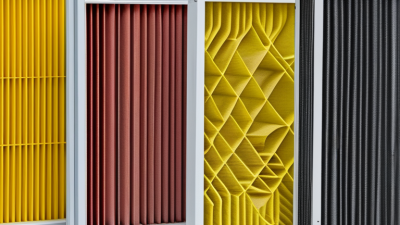
Choosing the best middle-efficiency filter media starts with comparing performance and airflow together. A high efficiency rating means little if the media creates excessive resistance. In real systems, that resistance can increase fan energy, reduce ventilation, and shorten service intervals.
I compare media under the same conditions: airflow, particle size, humidity, and face velocity. Efficiency should be measured at a defined test point, not copied from a general product sheet. Pressure drop matters just as much.
For example, two media samples may remove similar particles, but one may begin at 85 Pa while the other starts at 120 Pa. That difference becomes significant across thousands of operating hours. Airflow tells the story.
Dust-holding capacity also deserves attention. A filter that performs well when clean may lose airflow quickly in a dusty warehouse or busy commercial building. I check how the pressure drop changes during loading, then compare the final replacement point with the system’s fan capacity. Numbers need context.
Field conditions are rarely perfect, and laboratory results may not reflect moisture, uneven loading, or poor sealing. This is where careful installation and follow-up measurements matter. I have seen a well-rated medium perform poorly because air bypassed the frame. The media was not the only problem.
A reliable comparison should include efficiency, initial resistance, loaded resistance, service life, and total operating cost. Sometimes, the lowest-pressure option is not the best choice.
For global buyers, choosing middle-efficiency filter media begins with site conditions, not a catalog percentage. Synthetic nonwoven fibers are lightweight, pleat-friendly, and widely adaptable. They usually handle routine humidity well when bonded correctly. Fiberglass can offer stable thermal performance, yet it needs careful handling because fibers and brittleness create practical concerns. Cellulose blends may reduce cost, but moisture resistance and batch consistency require verification. Do not judge by efficiency alone. Initial pressure drop affects fan energy, while dust-holding capacity influences replacement intervals.
Pleated media provides compact surface area and practical airflow capacity. Deep-pocket designs suit dusty facilities, but they need strong frames and enough installation depth. Rigid mini-pleat structures can maintain stable geometry in restricted spaces. Seal quality matters as much as the media itself. Small leaks matter. Gaskets, stitching, adhesive points, and frame tolerances deserve inspection during sampling. A theoretically efficient filter may perform poorly when installation pressure distorts its shape.
Humid coastal sites may require water-resistant media and corrosion-resistant frames. Dry regions often benefit from effective prefiltration against coarse dust and sand. Offices, hospitals, workshops, and process areas also have different cleanliness demands. Buyers should request ISO 16890 ePM classifications, pressure-drop data, airflow ratings, and fire-performance results. Confirm the test conditions. A clean laboratory result can mislead when local dust, humidity, or maintenance practices differ. Seasonal field checks are useful, although they are often skipped. Sample testing remains a practical way to compare materials before large-volume purchasing.
Selecting the right middle-efficiency filter media starts with the air, not the catalog. For offices, schools, and retail buildings, choose media that balances particle capture with acceptable pressure drop. Check the tested efficiency rating, airflow range, dust-holding capacity, and frame dimensions. A filter that performs well at 2,000 m³/h may struggle at 3,000 m³/h. Sealing also matters. Small bypass gaps can reduce real-world protection.
Industrial systems need a closer review. Manufacturing areas may contain heavy dust, oil mist, humidity, or changing temperatures. Use moisture-resistant media in damp air-handling units. For dusty workshops, select deeper or more rigid media with strong dust-holding capacity. However, particulate filters are not automatically suitable for vapors or gases. Confirm the contaminant before purchasing. ISO 16890 data and independent test reports can support a reliable comparison, but test conditions may not match your site. That difference deserves attention.
Tips: Measure the existing filter first. Record airflow, pressure drop, replacement frequency, and operating temperature. Ask suppliers for full test conditions, not only an efficiency percentage. Compare total operating cost, including energy use and disposal. A cheaper filter can become expensive when its pressure drop rises quickly. I have seen buyers focus too much on initial price. That choice often needs reconsideration. Local climate, maintenance skills, and spare-media availability should also influence the final selection.
| Media Type | Typical Construction | Typical Efficiency Rating |
Initial Pressure Drop at 2.5 m/s |
Recommended Final Pressure Drop |
Dust-Holding Capacity Range |
Maximum Continuous Temperature |
Best-Fit HVAC or Industrial Application | Main Selection Advantage |
|---|---|---|---|---|---|---|---|---|
| Spunbond Synthetic Panel Media | Progressively structured polypropylene or polyester fibers | MERV 6–8 ISO Coarse 60–80% |
45–90 Pa | 150–250 Pa | 300–650 g/m² | 80°C | Commercial air-handling units, pre-filtration, warehouses, retail buildings and general ventilation | Low cost, low resistance and good moisture tolerance |
| Fine-Fiber Synthetic Pocket Media | Thermally bonded polyester or polypropylene pocket bags with gradient density | MERV 8–11 ISO ePM10 50–80% |
70–140 Pa | 250–400 Pa | 450–1,000 g/m² | 70°C | Office buildings, hospitals' general ventilation areas, schools, hotels and multi-stage HVAC systems | High dust loading with a relatively stable pressure rise |
| Glass-Fiber Pocket Media | Wet-laid glass fibers formed into deep-pocket filter bags | MERV 9–13 ISO ePM2.5 40–65% |
90–180 Pa | 300–450 Pa | 500–1,200 g/m² | 80°C | Industrial ventilation, clean manufacturing support areas, data rooms and systems requiring fine particle control | Good fine-particle capture and high available media area |
| Electret Synthetic Media | Electrostatically charged melt-blown or layered synthetic fibers | MERV 8–13 ISO ePM2.5 35–65% |
60–130 Pa | 200–350 Pa | 250–700 g/m² | 60°C | Energy-sensitive commercial HVAC systems, portable air cleaners and retrofit applications with limited fan capacity | Higher initial efficiency at comparatively low clean pressure drop |
| Cellulose-Synthetic Blend Media | Wet-strength cellulose fibers blended with synthetic reinforcement fibers | MERV 7–11 ISO Coarse 70–90% |
80–160 Pa | 250–400 Pa | 500–1,100 g/m² | 70°C | Dusty commercial buildings, general industrial supply air and applications prioritizing economical replacement media | Strong dust-holding performance and broad availability of formats |
| Polyester Roll Media | Continuous nonwoven polyester roll with bonded or layered fiber structure | MERV 5–8 ISO Coarse 50–80% |
35–100 Pa | 150–250 Pa | 250–600 g/m² | 100°C | Automatic roll filters, spray booths, ventilation pre-filters and high-airflow industrial equipment | Easy roll replacement, flexible sizing and good mechanical strength |
| Washable Synthetic Mesh Media | Open polyester, polypropylene or nylon mesh with rigid support frame | MERV 4–6 ISO Coarse 40–70% |
25–75 Pa | 120–200 Pa | 150–400 g/m² | 90°C | HVAC return-air grilles, agricultural ventilation, coarse dust removal and reusable equipment filters | Reusable construction can reduce solid waste where cleaning is practical |
| Activated-Carbon Composite Media | Synthetic or cellulose carrier combined with granular or impregnated activated carbon | MERV 8–11 ISO ePM10 50–80% |
100–220 Pa | 250–450 Pa | 200–600 g/m² | 50–70°C | Odor-control stages, laboratories, waste-handling areas, kitchens and industrial spaces with low-to-moderate gas contaminants | Provides particulate filtration plus limited adsorption of selected odors and vapors |
| System Condition | Recommended Media Direction | Important Checks Before Ordering |
|---|---|---|
| Limited fan capacity or strict energy targets | Use a deep, progressively structured synthetic or electret media with a large face area | Verify clean pressure drop, airflow volume and fan static-pressure margin |
| Heavy dust loading | Select deep-pocket synthetic, glass-fiber or cellulose-synthetic gradient media | Compare dust-holding capacity, final resistance and replacement interval |
| High humidity or occasional water exposure | Prefer hydrophobic synthetic media with water-resistant frames and separators | Check media wet-strength, drainage behavior, microbial-control requirements and frame corrosion resistance |
| Odor or low-level vapor concerns | Add an activated-carbon composite stage after suitable particulate pre-filtration | Identify the contaminant, concentration, humidity and required carbon mass; carbon media is not a substitute for gas-specific treatment |
| High-temperature industrial air | Use temperature-rated glass-fiber or high-temperature synthetic media | Confirm continuous and peak temperature, binder limits, frame material and fire classification |
International buyers should define “middle efficiency” before comparing filter media. The term varies across markets and product categories. Request the test method, filtration rating, airflow, pressure drop, and particle-size data. ISO 16890 and ASHRAE 52.2 use different reporting systems, so ratings should not be compared casually. Ask for a current, signed test report from an independent laboratory.
Fit matters as much as efficiency. Check the media thickness, roll width, frame depth, sealing method, and installation direction. A filter that performs well in a laboratory may fail after poor fitting. Measure the housing carefully, including a few millimeters of available tolerance. Review the material’s resistance to humidity, temperature changes, dust loading, and cleaning procedures. A simple sample test can reveal fiber shedding, uneven pleats, or excessive pressure loss.
Supply details deserve equal attention. Confirm production capacity, minimum order quantity, lead time, packaging strength, and export documents. Moisture barriers are important when containers cross humid routes. Request batch traceability and a replacement schedule based on operating hours, not guesswork. Local regulations may require additional declarations or safety documents. Check them before payment.
A spreadsheet helps.
Still, it can miss field conditions. Buyers should test samples in the actual equipment whenever possible. Do not select media from efficiency alone. Energy use, service life, disposal requirements, and stable availability can change the real cost. A lower initial price may become expensive when pressure rises quickly or deliveries arrive late.