How to Choose the Right Breathing Air Filter Cartridges?
Choosing the right Breathing Air Filter Cartridges is a safety decision, not a purchasing shortcut. The correct cartridge must match the contaminant, concentration, oxygen level, exposure time, and respirator model. A cartridge that looks suitable on a shelf may fail in a noisy workshop, a humid plant, or a confined maintenance area.
OSHA’s Respiratory Protection Standard, 29 CFR 1910.134, requires a written respiratory protection program, medical evaluation, fit testing, and proper cartridge change schedules. NIOSH also states that approved respirators must be selected according to their certification and intended use. Its Certified Equipment List helps verify approval status. These requirements matter because organic vapors, acid gases, particulates, and unknown mixtures need different protection. No cartridge handles every hazard.
Dr. John Howard, former NIOSH Director, has repeatedly stressed the practical principle: “A respirator is only as effective as the protection it provides when worn correctly.” That point is easy to underestimate. A worker may tighten straps, replace filters, and still choose the wrong cartridge. The error can remain invisible.
This guide examines cartridge labels, breakthrough risk, service-life information, storage conditions, and compatibility with supplied-air systems. It draws on OSHA, NIOSH, and manufacturer technical guidance, including 3M’s respirator selection resources. Technical data helps. Workplace observation helps more. A cartridge change schedule should reflect real exposure, temperature, humidity, and workload—not guesswork. Some decisions remain uncertain, and that uncertainty deserves review by a qualified industrial hygienist.
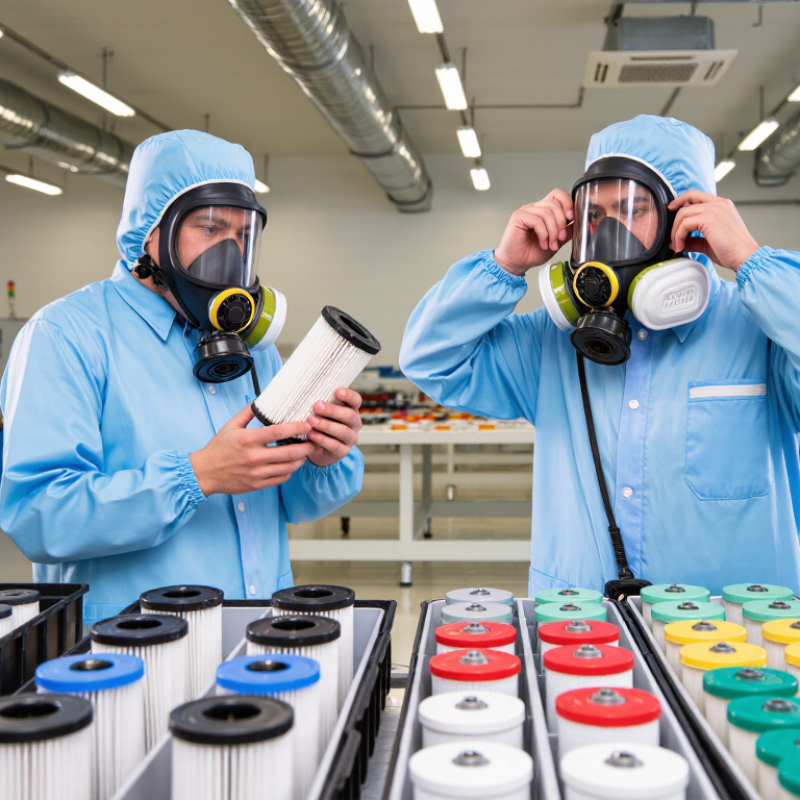
Understanding Breathing Air Filter Cartridge Functions and Limitations
How to Choose the Right Breathing Air Filter Cartridges?
Understanding Breathing Air Filter Cartridge Functions and Limitations
A breathing air filter cartridge must match the contaminant, concentration, airflow, and equipment design. Particulate elements capture dust, mist, and aerosols. Activated carbon media can reduce selected vapors and odors. These functions are not interchangeable. A particle filter cannot remove carbon monoxide or oxygen-deficient air. NIOSH’s Respirator Selection Logic warns that cartridge choice depends on contaminant properties, exposure levels, and service-life information, not appearance alone.
Compressed breathing air has strict quality requirements. OSHA 29 CFR 1910.134(i) specifies Grade D air, including oxygen between 19.5% and 23.5%. It also limits carbon monoxide to 20 ppm and carbon dioxide to 1,000 ppm. These figures show why a simple cartridge cannot correct every hazard. Carbon monoxide conversion systems may require catalyst monitoring, temperature control, and alarms. They are not universal protection.
Replacement timing is another limitation. Humidity, heat, oil loading, and changing contaminant levels can shorten cartridge life. OSHA requires a documented change schedule when service-life data is available; relying only on odor is weak practice. Odor warning can disappear after exposure or become unreliable through odor fatigue. In field inspections, clogged filters often appear as reduced airflow and uncomfortable breathing. That sign is easy to notice, but it may arrive late. A better selection process checks laboratory data, manufacturer instructions, pressure-drop limits, and air-quality test results. Even experienced teams can overlook an aging seal or a poorly maintained drain. That deserves honest review.
How to Choose the Right Breathing Air Filter Cartridges?
Cartridge selection depends on the contaminant type and the respirator approval. Gas and vapor cartridges are not substitutes for particulate filters, supplied-air respirators, or oxygen-deficiency protection.
1 = intended function; 0 = not a suitable protection method. Organic vapor and acid gas cartridges are designed for their labeled contaminant classes, while particulate filters capture particles rather than gases or vapors. Standard air-purifying cartridges do not provide oxygen, do not protect against oxygen-deficient atmospheres, and should not be relied on for carbon monoxide unless specifically approved for that contaminant.
Identifying Workplace Contaminants and Required Air Purity Levels
Choosing the right breathing air filter cartridge starts with identifying workplace contaminants, not selecting the most convenient product. Walk through the work area and review safety data sheets, process chemicals, dust levels, and compressor intake conditions. Common hazards include oil mist, water vapor, rust particles, odors, and organic vapors. Carbon monoxide requires special attention. Standard particulate or odor cartridges may not remove it reliably.
Air purity requirements depend on the respirator system and local occupational standards. Supplied breathing air often requires controlled limits for particles, moisture, oil, carbon monoxide, carbon dioxide, and unpleasant odors. A qualified safety professional should compare test results with the applicable standard. Portable air-quality monitors can reveal changing conditions near compressors, loading bays, or solvent operations. Do not rely on smell alone.
Match the cartridge to the confirmed contaminant and expected concentration. Check its rated service life, airflow range, temperature limits, and compatibility with the respirator. Replace cartridges according to measured use, manufacturer guidance, or earlier if damage or breakthrough is suspected. A written schedule helps, but it is not perfect. Work conditions can change faster than the schedule. Inspect seals, drains, and intake locations during every shift. If the contaminant is unknown, oxygen may be deficient, or concentrations can rise suddenly, air-purifying cartridges may be unsuitable. In that case, a properly selected supplied-air or self-contained system may be necessary. Worker fit testing and practical training still matter. A technically correct cartridge can fail through poor maintenance.
Matching Cartridge Types to Respirator and Compressor Systems
How to Choose the Right Breathing Air Filter Cartridges?
Matching cartridge types to respirator and compressor systems requires more than checking the cartridge size. Start by identifying the equipment. Air-purifying respirators use cartridges designed for specific gases, vapors, or particulates. Supplied-air respirators usually depend on compressor-line filters that remove oil mist, water, particles, and unpleasant odors.
Check the airflow rating carefully. A filter must support the respirator’s required flow without causing excessive pressure loss. For compressor systems, inspect the filtration stages, drain function, pressure settings, and connection threads. Never assume a general-purpose cartridge protects against every contaminant. It does not. Filters also cannot correct oxygen-deficient air or replace proper air-quality testing.
Match the cartridge to the hazard, concentration, temperature, and work duration. Use documented change schedules rather than waiting for an odor, since some contaminants provide little warning. Inspect cartridges for damage, moisture, or expired service life before installation. A poor seal can defeat a suitable filter. I have seen teams focus on filter efficiency while overlooking incompatible fittings or overloaded prefilters. That mistake is easy to repeat. Read the respirator and compressor instructions together, then confirm compatibility with a qualified safety professional and current local requirements. Document inspections clearly. Small details matter.
Applying Safe Selection, Installation, Storage, and Maintenance Practices
How to Choose the Right Breathing Air Filter Cartridges?
Applying Safe Selection, Installation, Storage, and Maintenance Practices
Choosing a breathing air filter cartridge starts with identifying the actual contaminants. Review air-monitoring results, safety data, and the cartridge’s approved service range. A cartridge cannot supply oxygen. It also may not protect against unknown concentrations or sudden chemical releases. That detail is easy to miss. When conditions are uncertain, consult a qualified occupational hygienist before selecting equipment.
During installation, inspect the housing, seals, threads, and cartridge surface for damage. Clean hands help prevent dust and oil from reaching connection points. Seat the cartridge firmly, but avoid excessive force. Record the installation date and expected replacement interval. Follow the equipment instructions, workplace procedures, and applicable respiratory protection requirements. A strong odor, breathing resistance, irritation, or visible damage requires immediate attention. Do not rely only on smell.
Storage affects performance before use. Keep unused cartridges sealed in their original packaging, away from sunlight, moisture, heat, and solvents. Never store them beside fuel, cleaning chemicals, or compressed gas equipment. After use, close the respirator in a clean container and replace cartridges according to the documented schedule. In practice, schedules can be imperfect when humidity, workload, or contaminant levels change. Recheck them regularly. I have seen teams record replacement dates carefully but overlook damaged gaskets during inspection. Training should include that simple, physical check. A written log, supervisor review, and periodic fit testing make the process more dependable.