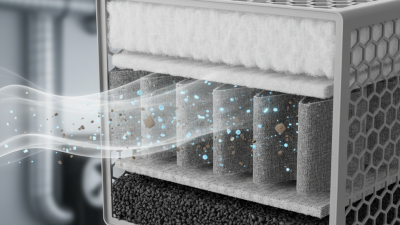
Choosing a panel air filter manufacturer affects more than the purchase price. Frame fit, media quality, and pressure drop all influence how a filter performs in an HVAC system. The World Health Organization reported that 99% of the global population breathed air exceeding its air-quality guideline levels in 2019. That figure highlights why filtration deserves careful evaluation, though a filter alone cannot solve every indoor-air problem.
For buyers comparing Plastic Penal Air Filter Manufacturers, technical evidence matters more than broad promises. Ask for test results, filter dimensions, airflow ratings, and pressure-drop data. ASHRAE Standard 52.2 provides a recognized method for testing particle-removal performance. A clear specification sheet helps engineers compare products on a consistent basis. So does a dependable frame. Plastic frames can resist moisture and avoid corrosion, but performance still depends on design and workmanship. Plastic is not automatically better. Poor sealing or a warped frame can leave gaps around the filter.
Energy use also belongs in the decision. The International Energy Agency reports that building operations account for about 30% of global final energy consumption. A filter with excessive resistance may increase the load on ventilation equipment. Manufacturers should therefore explain how their products balance filtration and airflow. Check whether samples match the quoted specifications, and confirm that replacement sizes remain available. Small details matter. Some claims may sound impressive, but published test data and consistent quality control provide a stronger basis for choosing a supplier.
Why Choose Plastic Panel Air Filter Manufacturers?
Understanding Plastic Panel Air Filters and Their Uses
A plastic panel air filter has a lightweight frame that holds filtering media in place. The frame is often molded plastic, while the media may use synthetic fibers or another suitable material. Air passes through the media, where airborne dust and lint can be captured. Simple construction. These filters are used in ventilation systems, air-conditioning units, and some equipment enclosures. Their flat shape makes them convenient where installation space is limited.
The right filter depends on the equipment, airflow needs, and the particles being managed. Check the required dimensions and fit before ordering; a small gap can let air bypass the filter. Manufacturers can provide specifications for frame size, media type, and replacement intervals, but those details should match the system’s instructions. In everyday use, inspect the filter for visible dust or damage and replace it as recommended. Not every plastic panel filter suits every setting. High humidity, heavy dust, or unusually demanding airflow may call for a different design, so selection deserves a closer look.
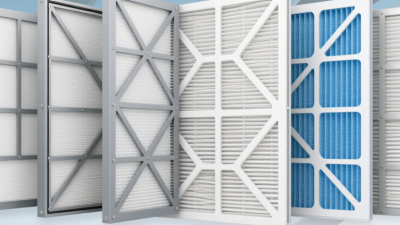
Designing a plastic panel air filter starts with the equipment it must fit, not with the frame alone. Manufacturers review opening dimensions, airflow targets, operating temperature, and expected dust conditions. These details guide the panel depth, media area, and frame geometry. A close fit helps limit air bypass around the edges. Small details matter.
Production often begins by molding or preparing the plastic frame, then cutting filter media to a controlled size. Technicians fold or pleat the media at measured intervals. This creates useful surface area while helping control airflow resistance. Support grids may be added to reduce movement under airflow. The media is secured with a suitable adhesive or mechanical joint, depending on the design. Even a small gap at the frame can affect performance.
Quality checks commonly include verifying dimensions, inspecting seams, and testing airflow resistance on sample panels. No pleat count suits every system. A design that works well in a test setup may be awkward to install in a real housing. That trade-off deserves attention. Manufacturers should compare test results with the filter’s intended operating conditions, rather than relying on appearance alone.
Choosing a plastic panel air filter manufacturer starts with the frame and media, not the catalog photo. A rigid molded frame can resist handling damage and help maintain a stable seal in a correctly sized housing. The filter media should suit the target particle range, airflow, and operating conditions. Polypropylene frames are common, but resin choice and joint quality still matter. Small details count. Ask for material data and dimensional tolerances.
Filtration performance depends on media structure, pleat spacing, and how the panel sits against its gasket. A higher efficiency rating may increase airflow resistance, so compare data under stated test conditions. Check pressure drop, rated airflow, and the test method. Durability is practical, too: humidity, temperature changes, dust loading, and repeated replacement can expose weak corners or loose media. No panel lasts forever. Inspect seals and pressure drop at planned intervals; replacement timing varies by site.
Tips: Request a sample and check its fit in the actual housing. Record the initial pressure drop, then compare it after operation. If the seal looks uneven, inspect the housing as well; the filter may not be the only issue.
ISO 16890 requires at least 50% measured efficiency for a filter to be classified in an ePM group. Compare certified test results, material specifications, and durability data when evaluating a filter.
The 50% bars show classification thresholds, not the performance of a particular product. Actual efficiency and service life depend on the filter design, test results, operating conditions, and maintenance.
Quality control matters because a plastic panel filter’s frame, seal, and media work as one assembly. A frame can look sturdy yet leak around a poorly seated edge. Ask manufacturers for documented checks on dimensions, bonding, airflow resistance, and batch consistency. Request performance results for the exact filter configuration, not just the media alone. Details matter.
The U.S. EPA’s Guide to Air Cleaners in the Home reports that MERV 13 filters capture at least 50% of 0.3–1 μm particles and 85% of 1–3 μm particles under the applicable test method. These figures are a useful reference, not a promise that every plastic panel filter meets MERV 13. For comparable specifications, buyers can also look for testing aligned with ASHRAE 52.2 or classification under ISO 16890. Custom options may include panel depth, frame dimensions, media type, and gasket placement. A manufacturer should explain how each change affects fit and pressure drop. More options can help. They can also make repeatability harder, so approve a sample and inspect its fit before ordering a large batch. One detail is easy to miss: verify that replacement panels match the installed housing, not only the drawing.
Plastic panel air filter manufacturers serve a wide range of buildings and work sites. Their products are used in office HVAC units, schools, hospitals, food-processing rooms, workshops, and data centers. Plastic frames can be useful in damp areas because they resist corrosion and are easy to handle. But frame material alone does not determine performance. Filter media, airflow resistance, sealing, and the equipment’s dimensions all matter. A poorly fitted panel may let air bypass the filter.
The U.S. Environmental Protection Agency’s Introduction to Indoor Air Quality notes that people spend about 90% of their time indoors. That makes dependable filtration relevant in spaces where occupants work, study, or receive care. In hospitals, maintenance teams may prioritize consistent fit and replacement access. Manufacturing sites may need filters suited to dust levels and operating conditions. ASHRAE Standard 52.2 provides a method for evaluating air-filter performance using MERV ratings; buyers should check ratings against system requirements, not assume one filter suits every application. This detail is easy to miss.
Tips: Measure the existing slot. Check the airflow direction. Confirm the filter’s rating and pressure drop with the equipment supplier. Keep a record of replacement dates; small gaps in maintenance can become overlooked.
| Industry | Typical Applications | Common Filtration Needs | Potential Benefits of Plastic Panel Filters | Selection Considerations |
|---|---|---|---|---|
| Commercial buildings | Air-handling units and ventilation systems in offices, retail spaces, hotels, and schools | Capture of common airborne dust and particles; protection of downstream HVAC components | Lightweight frames can be convenient to handle and may resist corrosion in humid service conditions | Match the filter dimensions, airflow capacity, and efficiency to the HVAC equipment and maintenance plan |
| Residential HVAC | Central heating, ventilation, and air-conditioning systems in homes and apartments | Routine particle filtration while maintaining airflow through the system | Plastic frames can provide a light, non-rusting alternative to some metal-framed designs | Check the system’s required filter size, airflow direction, and recommended replacement interval |
| Manufacturing and industrial facilities | General ventilation, equipment protection, and prefiltration in plant air systems | Removal of airborne dust and larger particles before air reaches downstream components | Frame material may be useful where moisture or corrosion is a concern | Assess dust loading, operating temperature, airflow, and any exposure to chemicals or process contaminants |
| Food and beverage processing | Ventilation and HVAC systems in processing, packaging, and storage areas | General air filtration as part of a broader facility hygiene and ventilation program | Some plastic frames are suitable for damp environments and are easy to handle during replacement | Confirm material compatibility, cleaning requirements, and applicable facility or process standards |
| Healthcare facilities | General HVAC filtration in administrative, public, and support areas | Particle control as one stage of a system designed for the area’s required air quality | Lightweight construction can simplify handling in routine filter-change work | Use the filtration level and system configuration specified for each space; a panel filter alone does not establish a required room classification |
| Data centers and IT facilities | Air-conditioning and ventilation systems serving server rooms and technical spaces | Control of airborne dust that could accumulate on equipment and system components | Plastic frames can offer a corrosion-resistant option for suitable HVAC applications | Consider airflow, dust conditions, filter pressure drop, and the equipment manufacturer’s maintenance guidance |
| Transportation and vehicle HVAC | Cabin ventilation and air-conditioning systems in buses, trains, and specialty vehicles | Filtration of airborne particles within compact or application-specific air systems | Low weight can be advantageous where lightweight components are preferred | Verify fit, vibration resistance, airflow requirements, and compatibility with the vehicle system |
| Agricultural and horticultural facilities | Ventilation and air-conditioning systems in greenhouses and indoor growing spaces | General particle filtration in environments that may have elevated humidity or airborne debris | Plastic frames may be appropriate in damp conditions when the selected materials are compatible | Check humidity exposure, dust loading, cleaning practices, and the filter’s intended operating conditions |
Application suitability depends on the specific filter construction and operating conditions. Confirm dimensions, airflow, filtration performance, temperature limits, and material compatibility with the manufacturer and the system requirements.