Leave Your Message

China Best Cheap Plate Primary Medium Efficiency Filter

Choosing the China Best Cheap Plate Primary Medium Efficiency Filter requires more than comparing online prices. A suitable filter should balance purchase cost, airflow, dust-holding capacity, and service life. The phrase Cheap Plate Primary Efficiency Medium Filter may describe a practical panel filter, but product quality can vary widely between suppliers.

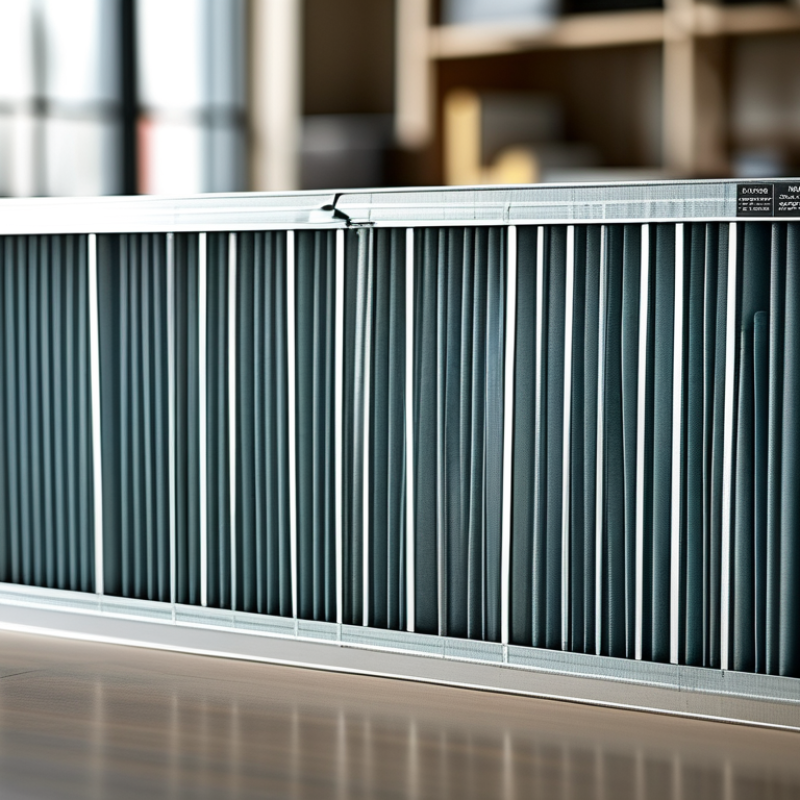
In real applications, a technician may inspect a galvanized steel frame, synthetic filter media, and sealed edge construction. A 592 × 592 × 46 mm panel can fit common air-handling units, yet dimensions must be checked carefully before ordering. Even a small gap may allow unfiltered air to bypass the media. Initial resistance also matters. A filter with lower resistance can reduce fan energy, while a denser filter may capture more particles.

Reliable suppliers should provide airflow data, pressure-drop curves, efficiency test results, and consistent batch records. ISO 16890 classifications are useful, but buyers should also confirm local HVAC requirements and operating conditions. Factory experience matters here. A manufacturer that explains testing methods clearly is usually more dependable than one offering only impressive claims.

“Cheap” is not always economical. A low-cost filter may need frequent replacement or create higher energy use. I would compare total operating cost over several months, not only the invoice price. Some product descriptions remain too general, and this deserves closer review. The best choice should be verified through samples, inspection reports, and practical performance. Small details matter.
China Best Cheap Plate Primary Medium Efficiency Filter

China’s Cheap Plate Primary Filters: Definition and HVAC Applications

China Best Cheap Plate Primary Medium Efficiency Filter

China’s Cheap Plate Primary Filters: Definition and HVAC Applications

A plate primary filter is a front-stage air filter with a flat or pleated medium inside a rigid frame. It captures larger dust, fibers, and airborne particles before finer filters. In Chinese HVAC supply chains, these filters are often produced in common panel sizes. Their low purchase cost suits cost-conscious projects.

Typical applications include air handling units, rooftop systems, fan coil units, and return-air grilles. They protect coils, fans, and secondary filters from rapid dust loading. Offices, schools, workshops, and retail spaces commonly use them. Filter efficiency may be described by different standards, so buyers should check the test method. “Primary” does not mean suitable for every indoor air-quality need.

Pressure drop matters. A filter that looks inexpensive may increase energy use when its media loads quickly. In practice, installers should record airflow, face velocity, frame dimensions, and replacement intervals. A tight seal is essential; gaps can bypass the filter completely. That detail is often missed.

Cheap is not always economical. Some low-cost panels have weak frames or uneven media, especially under humid conditions. A better evaluation includes dust-holding capacity, moisture resistance, disposal needs, and supply consistency. I would also request sample testing before large orders. Specifications can appear clear, yet field performance may differ. That uncertainty deserves attention.
ISO 16890 Ratings: Coarse and ePM10 Efficiency Ranges of 30–80%

China Best Cheap Plate Primary Medium Efficiency Filter

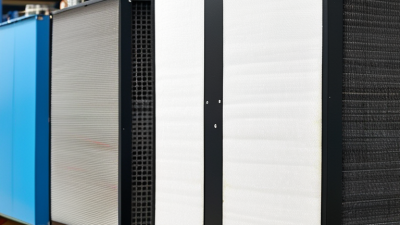
A plate primary filter is often the first barrier before finer air-cleaning stages. Its value depends on tested performance, not only purchase price. Under ISO 16890, filters are assessed against particulate matter fractions, including PM10. Coarse filters remain below the 50% ePM10 threshold, while ePM10 filters reach at least 50% efficiency.

The 30–80% range needs careful interpretation. A filter near 30% may capture larger dust, lint, and some pollen, but it offers limited PM10 control. At 50–80% ePM10 efficiency, protection improves for offices, workshops, and light commercial ventilation.

ISO 16890:2016 requires laboratory testing with particle-size distributions, making results more useful than an old single-number rating. Still, field performance changes with dust loading and poor sealing.

Eurovent Recommendation 4/23 highlights pressure drop, test procedures, and system selection as important comparison points. A low-cost plate filter can reduce operating expenses when its initial resistance stays modest. For example, a 200 Pa filter can demand more fan energy than a 90 Pa alternative, depending on airflow and runtime. Check the frame fit.

Cheap does not always mean efficient. That wording can mislead. Maintenance records, replacement intervals, and local dust conditions should influence the final choice. A practical review should compare ePM10 efficiency, pressure drop, dust-holding behavior, and disposal requirements together. I would not trust efficiency alone.

Construction Data: 25–100 mm Depths and 50–150 Pa Initial Resistance

China best cheap plate primary medium efficiency filters are often specified at 25–100 mm depths. That range affects media area, dust-holding capacity, and airflow stability. A 25 mm panel may suit compact air-handling sections. A 100 mm version usually offers more media surface and slower loading. However, deeper is not automatically better.

The stated 50–150 Pa initial resistance must be read at a defined airflow. Without face velocity, the number is incomplete. ASHRAE Standard 52.2 evaluates particle removal by particle size, while ISO 16890 classifies filters through ePM1, ePM2.5, and ePM10 performance. These methods support fair testing, but they do not replace site measurements.

IEA’s Buildings 2023 analysis reports that buildings consume about 30% of global final energy. Excessive filter resistance can therefore increase fan energy and operating cost. Every pascal matters.

A practical inspection should record airflow, filter depth, sealing condition, and pressure before installation. Dust loading changes resistance quickly. Catalog data can look precise. Field results may not. I would specify 50–150 Pa only after confirming the test airflow and frame dimensions. A low purchase price is useful, but a poorly sealed 100 mm filter can waste its efficiency advantage. Small gaps remain a common weakness.

MERV 8–13 Equivalents for Medium-Efficiency Air Filtration

China Best Cheap Plate Primary Medium Efficiency Filter

MERV 8–13 equivalents support practical medium-efficiency air filtration. Under ASHRAE Standard 52.2, MERV 13 filters must achieve at least 50% removal for 0.3–1.0 micron particles, 85% for 1.0–3.0 microns, and 90% for 3.0–10 microns. MERV 8 offers lower performance, but usually creates less airflow resistance. The U.S. EPA’s Guide to Air Cleaners in the Home, published in 2021, recommends MERV 13 or higher when HVAC systems can handle the pressure drop.

In real facilities, filter selection is not only about the lowest purchase price. A poorly fitted plate filter can leak around its frame, reducing actual protection. Higher efficiency may also increase fan energy use. ASHRAE’s HVAC guidance repeatedly emphasizes airflow, maintenance, and system compatibility. I have seen inexpensive filters load quickly in dusty workshops. The filter looked suitable, yet the pressure gauge told another story. That detail deserves more attention.

Tips: Check the filter’s tested rating, dimensions, gasket quality, and initial pressure drop. Replace it when pressure rises or airflow weakens. Do not assume MERV 13 equals every ISO 16890 ePM class; the test methods differ. Keep installation records, because operating conditions can change faster than specifications.

Cost, Service Life, and Selection Criteria for Chinese Filter Suppliers

Cost, Service Life, and Selection Criteria for Chinese Filter Suppliers

A low purchase price does not always mean a low operating cost. For a standard 24-by-24-inch panel, compare unit price, freight, gasket quality, replacement labor, and fan energy. ASHRAE Standard 52.2 measures particle removal by size, not simply by a general “efficiency” label. For example, MERV 13 requires at least 50% efficiency for 0.3–1 micron particles, 85% for 1–3 microns, and 90% for 3–10 microns. Ask suppliers for recent test reports from accredited laboratories.

Service life depends on dust loading, airflow, humidity, and the filter’s initial pressure drop. ENERGY STAR commonly recommends checking filters every month and replacing them every one to three months in typical buildings. That schedule is only a starting point. A differential pressure gauge gives better evidence. Record readings on a clean filter, then replace it at the approved final resistance. ISO 16890 classification, frame dimensions, media area, adhesive strength, and leakage control should appear in the specification.

Request three samples before a large order. Inspect pleat spacing, corner sealing, and fit inside the air-handling unit. Cheap panels sometimes collapse after heavy dust loading. That mistake costs more. Chinese suppliers should provide batch traceability, packing details, lead times, and clear claims procedures. Still, supplier documents are not perfect evidence. Independent retesting remains sensible, especially when a small pressure-drop difference may increase annual fan energy.

China Best Cheap Plate Primary Medium Efficiency Filter - Cost, Service Life, and Selection Criteria for Chinese Filter Suppliers

Filter Type Typical ISO 16890 Classification Common Application Typical Initial Pressure Drop Indicative Unit Cost
USD/unit*
Expected Service Life Recommended Replacement Condition Key Selection Criteria
Flat panel pre-filter ISO 16890 Coarse 60%–80% Air-conditioning return air, ventilation cabinets, and protection of downstream filters 30–70 Pa at rated airflow $2.50–$8.00 1–3 months in dusty environments; up to 3–6 months in clean indoor applications When visibly loaded, airflow is restricted, or pressure drop reaches the equipment limit Media area, dust-holding capacity, frame rigidity, moisture resistance, and cut-to-size accuracy
Pleated primary panel ISO 16890 Coarse 70%–90% Commercial buildings, retail spaces, offices, and general fresh-air units 45–95 Pa at rated airflow $4.00–$12.00 3–6 months in normal conditions; shorter near construction or heavy traffic When final pressure drop is reached or dust loading causes noticeable airflow reduction Pleat depth, effective filtration area, seal quality, synthetic or fiberglass media, and disposal method
Medium-efficiency ePM10 filter ISO 16890 ePM10 50%–75% General HVAC supply air, schools, hotels, offices, and light industrial ventilation 70–140 Pa at rated airflow $7.00–$20.00 4–9 months, depending on outdoor pollution, operating hours, and upstream pre-filtration When pressure drop reaches the AHU design limit or indoor air quality declines Verified test report, airflow rating, dust-holding capacity, gasket compression, and frame sealing
Medium-efficiency ePM2.5 filter ISO 16890 ePM2.5 50%–70% Urban buildings, healthcare support areas, laboratories, and systems requiring improved fine-particle control 90–170 Pa at rated airflow $10.00–$28.00 4–8 months under typical urban conditions When measured pressure drop approaches the specified final resistance or fan capacity is affected Fine-particle efficiency, low-resistance media, pleat stability, leak prevention, and test-method consistency
Compact medium-efficiency filter ISO 16890 ePM1 50%–65% High-quality commercial ventilation, clean production areas, and pre-filtration before higher-grade filters 100–200 Pa at rated airflow $15.00–$45.00 6–12 months when supported by an effective coarse pre-filter When the final resistance specified by the equipment manufacturer is reached Large media area, low initial resistance, mechanical stability, leakage control, and available test documentation
Washable synthetic panel Usually rated by manufacturer; verify ISO 16890 test data Reusable ventilation systems, industrial intake air, and applications with frequent maintenance access 40–110 Pa when clean $8.00–$25.00 6–24 months, subject to washing frequency and media durability When the media is damaged, permanently blocked, deformed, or cannot be cleaned effectively Washability, drying time, frame corrosion resistance, media recovery after washing, and replacement-part availability
Typical standard panel size Performance depends on media and airflow, not size alone Common AHU and fan-filter housing installations Must be confirmed at the specified airflow Common reference size: 592 × 592 × 46/96 mm Size does not determine service life; dust loading and operating conditions are decisive Replace according to measured pressure drop rather than calendar time alone Face dimensions, depth, airflow direction, gasket position, tolerances, and installation clearance
Galvanized-steel frame option Efficiency is determined by the filter media and construction General commercial and industrial HVAC systems Frame has minimal impact when properly sealed Usually adds $1.00–$5.00 compared with a basic cardboard frame Approximately 6–24 months depending on humidity and handling Replace when corrosion, deformation, or seal damage can cause bypass leakage Steel thickness, coating quality, corner strength, corrosion resistance, and dimensional consistency
Cardboard or paperboard frame option Efficiency is determined by the filter media and construction Dry indoor environments and cost-sensitive disposable applications Usually comparable to other frames with the same media and airflow Often the lowest-cost option: approximately $2.50–$15.00 Normally one operating cycle; often 1–6 months depending on contamination Replace if damp, crushed, delaminated, or unable to maintain a tight seal Moisture resistance, corner reinforcement, adhesive quality, recycling requirements, and packing protection
Supplier verification criterion Request ISO 16890 classification and complete test conditions Applicable to all primary and medium-efficiency filters Compare initial resistance at the same airflow and face velocity Compare total cost, not purchase price alone Use pressure-drop history and replacement frequency to estimate actual life Confirm the stated final resistance and maintenance procedure Check sample approval, batch consistency, traceability, inspection records, export packaging, and response time
Total-cost evaluation Higher efficiency may increase pressure drop and energy consumption Life-cycle comparison for HVAC operating budgets Include fan energy caused by filter resistance Calculate purchase cost, freight, disposal, labor, and energy together A longer-life filter may be economical if pressure drop remains controlled Set a replacement point based on airflow, indoor-air requirements, and fan capacity Balance efficiency, initial resistance, service life, availability, warranty, and logistics cost
Data note: Cost and service-life figures are indicative market ranges for commonly supplied disposable panel or pleated filters and are not quotations from any specific company or brand. Actual values vary with dimensions, media area, airflow, pollution level, operating hours, frame material, order quantity, packaging, and shipping terms. Filter efficiency should be compared using the same ISO 16890 test classification and airflow conditions.