
Air filtration performance depends on more than the filter media. The frame must hold its shape, support a secure seal, and withstand airflow, handling, and routine replacement. For buyers comparing Air Filter Plastic Frame Manufacturers, these details affect assembly consistency and the risk of air bypass. A thin edge can look minor on a drawing. It matters once the filter is installed.
ASHRAE Standard 52.2 sets a recognized method for testing particle-removal efficiency across HVAC filters. Its framework helps buyers assess filtration performance, but it does not certify every frame design or supplier. Grand View Research’s HVAC filters market analysis also points to continued demand across residential, commercial, and industrial applications. That broader market trend makes supplier evaluation more important—not less. Product specifications should be checked against actual use, including frame dimensions, resin choice, joint strength, and operating conditions.
This guide introduces ten manufacturers and the factors that distinguish them, from molding capabilities to customization and quality controls. Look for evidence, not just polished claims: request drawings, material data, sample parts, and clear inspection criteria. A good sample helps. It cannot prove long-term consistency on its own. Some comparisons will remain imperfect because manufacturers disclose different levels of detail. That is worth acknowledging. The aim is a practical shortlist, not a universal ranking, so readers can match a supplier’s strengths to their own filter design and production needs.
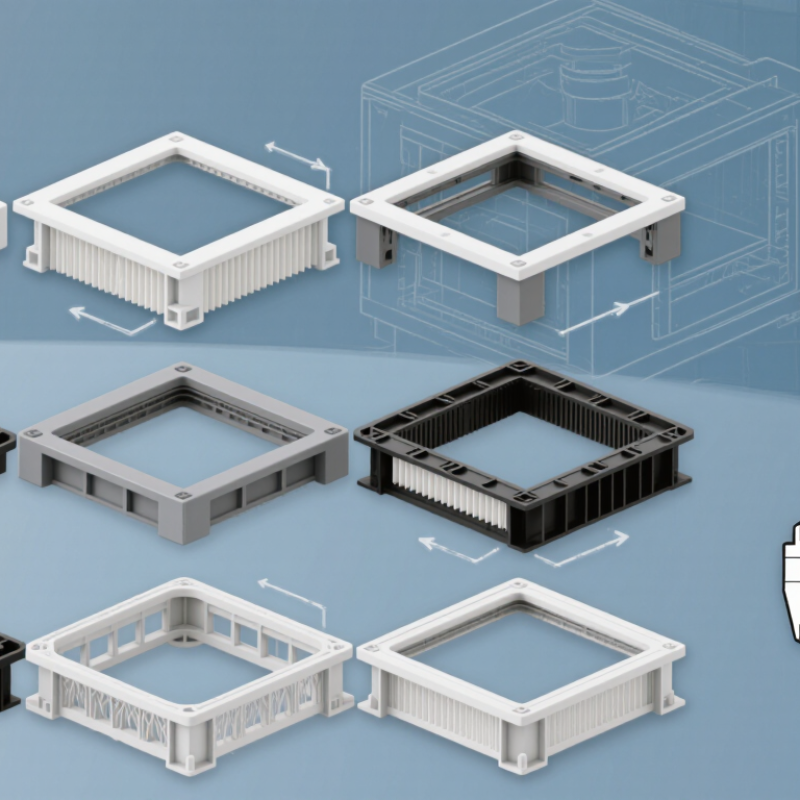
An air filter plastic frame is the rigid perimeter that supports the filter media and helps it fit inside a housing. It may be molded as one piece or assembled around pleated material. The frame keeps the pleats spaced and limits bending when air moves through the filter. Some designs include ribs or crossbars to reduce flex without blocking too much airflow. A firm, even edge also helps the filter sit against its housing. No magic here.
During operation, air passes through the media while the frame holds the assembly in position. If the fit is loose, air may slip around the filter instead of passing through it. Plastic frames are often valued for their low weight and resistance to moisture, though performance depends on the resin, shape, and manufacturing quality. Designers must balance stiffness, airflow, and material use. Too many supports can obstruct flow; too little support may let pleats collapse. The trade-off is not always obvious. Check that edges are straight and joints are secure, since small defects can affect installation and sealing. A frame can look sturdy on a workbench yet flex once fitted under pressure.

Air-filter frames commonly use polypropylene (PP), ABS, or high-impact polystyrene (HIPS). PP is lightweight and moisture-resistant, while ABS offers greater rigidity and a smooth molded finish. HIPS can suit moderate-duty filters, but it may flex under load. That difference matters. A frame that bows under higher airflow can let dust bypass the filter media. Resin selection should account for operating temperature, media weight, and sealing pressure. Recycled content can reduce virgin material use, though batch variation may affect color and dimensions. Testing a complete assembly is more reliable than depending on resin data sheets alone.
Injection molding suits complex corners, reinforcing ribs, and integrated clips, particularly at higher volumes. Tool design affects wall thickness and shrinkage; uneven sections can cause sink marks or warped edges. Extruded profiles work well for straight rails, which are cut to length and joined at corners. Some designs pair molded corners with extruded sides. Ultrasonic or hot-plate welding can secure joints, while mechanical tabs allow simpler assembly. Trade-offs remain. A welded seam may be strong, yet poor alignment can create a leak path. Check corner fit, frame flatness, and joint strength on finished samples. No frame is perfect. Small pilot runs can reveal problems that drawings miss.
10 Best Air Filter Plastic Frame Manufacturers
How to Evaluate Air Filter Plastic Frame Manufacturers
A reliable evaluation starts with evidence, not a polished sample. Ask manufacturers for resin specifications, dimensional tolerances, temperature limits, and batch traceability. Check whether they test finished filters for frame warping, seal gaps, and airflow leakage. A rigid frame can still fail if corners split during assembly. Small details matter. Request inspection records from multiple production batches, not only a sample made for sales.
Compare testing claims with recognized methods. ASHRAE Standard 52.2 measures HVAC filter efficiency across particle-size ranges, so ask whether reported results cover the complete filter assembly. The U.S. EPA’s Guide to Air Cleaners in the Home states that HEPA filters capture at least 99.97% of 0.3-micron particles. That figure describes HEPA filtration performance, not a plastic frame’s performance. Keep those claims separate. Ask for the test laboratory, test date, and exact filter configuration. Also review mold maintenance, production capacity, and change-control procedures. A low unit price may hide inconsistent dimensions or costly tooling delays. Still, a neat sample can mislead; request a pilot run and inspect the parts yourself.
Use these suggested weights to compare suppliers consistently. Review material and dimensional requirements, inspect quality controls and relevant test records, and verify lead times and support. The percentages are a buyer-side evaluation framework, not measured performance data or a ranking of manufacturers.
Profiles of ten leading air filter plastic frame manufacturers should compare more than catalog size. Useful distinctions include precision extrusion, in-house mold tooling, recycled-resin blends, tight-tolerance molding, welded corners, integrated gasket channels, lightweight designs, heat-resistant polymers, clean production areas, and rapid prototyping. These capabilities affect fit, handling, and assembly on a filter line. A frame that twists under pressure can leave uneven gasket contact. Small details matter.
ASHRAE Standard 52.2-2017 reports that MERV 13 filters capture:
at least 50% of particles 0.3–1 micrometer, 85% of particles 1–3 micrometers, and 90% of particles 3–10 micrometers.
These figures describe filter performance, not plastic-frame performance; frame makers should not imply otherwise. Buyers can ask suppliers for resin specifications, dimensional inspection records, corner-strength test results, and evidence that samples fit the intended media pack. Fit matters.
One limitation deserves attention: published supplier claims rarely use identical test conditions, so comparisons can look more precise than they are. Requesting comparable samples is a practical check.
Plastic-frame air filters are used in residential HVAC units, commercial rooftops, cleanrooms, and industrial equipment cabinets. Each setting puts different demands on the frame. A rooftop unit may face heat, rain, and vibration, while a cleanroom filter needs stable dimensions and a dependable seal. In a cabinet, compact fit and low weight may matter more than appearance. Fit matters.
When comparing manufacturers, ask how they control frame dimensions, corner strength, and gasket contact. Request material data for temperature ranges, chemical exposure, and expected service conditions. A frame that stays rigid during installation can help prevent bypass gaps, but excessive stiffness may make assembly awkward. Ask for sample parts and inspection records, not only a catalog specification. Small details matter.
Review tooling capability, production capacity, and process checks for batch-to-batch consistency. Clarify whether colorants or recycled content affect impact resistance or dimensional stability. One factor is difficult to judge from a datasheet alone: how easily workers can install the frame while wearing gloves. Test representative samples in the actual filter housing before approving a design. A low quote may look attractive, yet tooling changes, scrap, or delays can outweigh the savings. I would not rank price first, though budget limits are real.