Top 10 Air Filter Media Types You Need to Know?
In the world of air filtration, understanding "Air Filter Media Types" is crucial. According to Dr. Emily Chen, a leading expert in air quality research, "The right media can significantly enhance the effectiveness of air filters." Her insights highlight the importance of selecting appropriate materials for various applications.
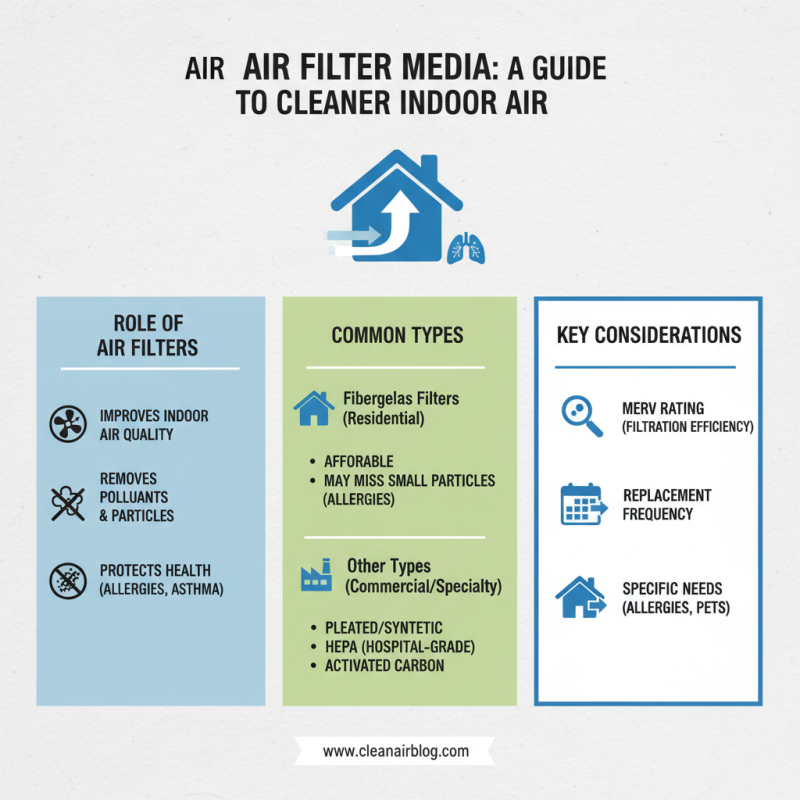
Air filter media serve as barriers against pollutants, allergens, and dust. Various types exist, each with unique properties. For example, fiberglass filters are common for residential use, while HEPA filters are preferred in healthcare settings. However, users often overlook the performance differences among media types.
Choosing the wrong type of air filter can lead to inadequate filtration. It’s easy to assume that all filters work the same. Yet, materials differ in ability to capture particles and airflow resistance. This often leads to unexpected costs and health impacts. Recognizing these variations can empower consumers to make informed decisions while addressing their specific air quality needs.
Understanding Air Filter Media: A Comprehensive Overview
Air filter media plays a critical role in maintaining indoor air quality. Various types offer unique benefits and applications. According to a recent industry report, HEPA filters can capture 99.97% of particles that are 0.3 microns in size. This efficiency makes them ideal for hospitals and labs. However, they may not suit every setting due to airflow resistance.
Electrostatic filters have gained popularity. They trap dust and allergens more effectively than standard filters. A study highlighted that these filters improve efficiency by up to 50% when compared to traditional fiberglass options. Yet, they require regular maintenance to avoid reduced performance, a detail often overlooked.
Fiberglass filters, while affordable, typically capture larger particles. They tend to let smaller pollutants pass through. This can lead to concerns about health impacts, especially in urban areas. Choosing the right filter media depends on specific needs and conditions. An ideal choice often balances cost, efficiency, and maintenance demands.
Top 10 Air Filter Media Types You Need to Know
| Media Type |
Material |
Efficiency |
Applications |
| Fiberglass |
Fiberglass |
30-60% |
Residential, Commercial |
| Pleated Filter |
Polyester, Cotton |
40-85% |
HVAC Systems |
| HEPA Filter |
Fiberglass, Plastic |
99.97% |
Hospital, Laboratories |
| Activated Carbon |
Activated Carbon |
Varies |
Odor Control |
| Electrostatic Filter |
Synthetic Material |
50-80% |
Residential, Commercial |
| Wire Mesh |
Metal |
Low |
Pre-filtering, Industrial |
| Paper Filter |
Paper |
30-50% |
HVAC Systems |
| Nanofiber Filter |
Nanofibers |
95-99% |
Advanced Air Filtration |
| Cellulose Filter |
Cellulose, Synthetic Fibers |
40-70% |
Industrial, Commercial |
| Cylindrical Filter |
Various Materials |
Varies |
Specialty Applications |
Types of Air Filter Media and Their Applications
Air filter media plays a crucial role in maintaining indoor air quality. It comes in various types, each suited for specific applications. Fiberglass filters are common in residential settings. They are affordable but may not capture the smallest particles. This can be a concern for allergy sufferers.
Disposable pleated filters are another option. They have a larger surface area, which enables them to trap more dust and allergens. These filters can last longer but may require frequent changes. Synthetic filters are also available and tend to perform better in high humidity environments. However, some might struggle with efficiency in very low temperatures.
HEPA filters are popular in healthcare settings. They can capture tiny particles like bacteria and viruses. Yet, they might restrict airflow more than other types. Activated carbon filters excel in removing odors and chemicals. Still, they may not be the best choice for trapping particulates. Each type of air filter media has its pros and cons. Users should consider their specific needs and challenges when selecting the right one.
Factors Affecting Air Filter Efficiency and Performance
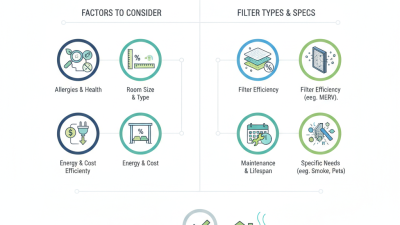
Air filter efficiency is influenced by several factors.
Particle size, filter media, and air flow rate are key elements.
Smaller particles can evade capture, impacting indoor air quality.
Studies show that filters capturing particles as small as 0.1 microns significantly improve air quality.
Another critical factor is the filter's resistance to airflow. High resistance may restrict airflow, decreasing system efficiency.
Some reports indicate that a 1-inch thick filter can increase energy costs by up to 15%.
Regular maintenance and timely replacement help maintain optimal performance.
Tip: Check your filter's rating often.
Filters with a higher MERV rating can capture more particles.
However, balance this with airflow needs.
Prioritize both efficiency and energy use.
The filter material also plays a role.
HEPA filters capture up to 99.97% of particles, while pleated filters offer a good mix of efficiency and airflow.
In contrast, fiberglass filters may allow more particles to pass through.
Each material has its strengths and weaknesses, highlighting the importance of informed choices.
Comparative Analysis of Popular Air Filter Media Types
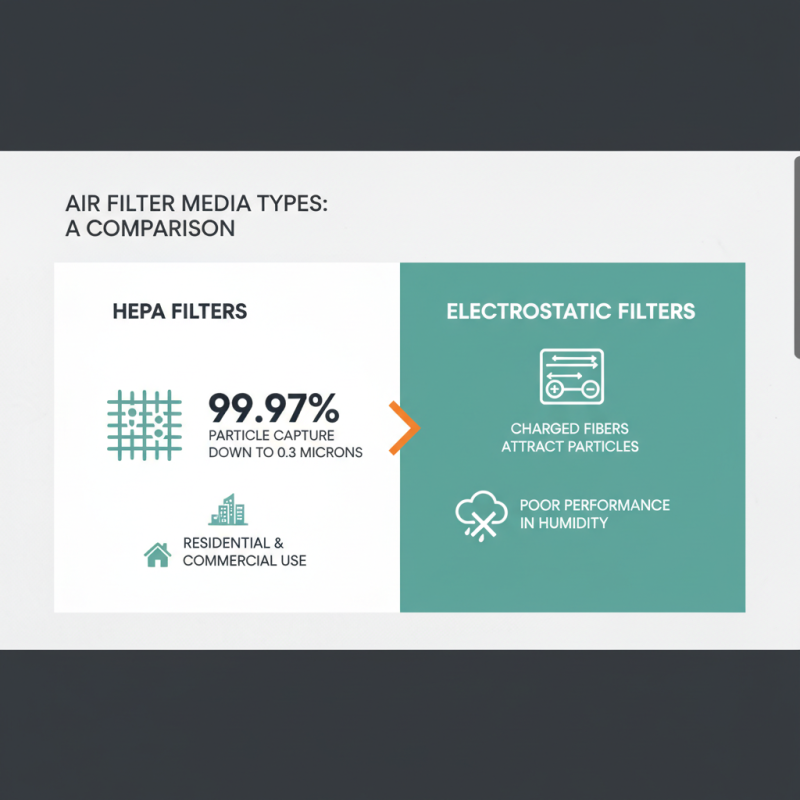
When considering air filter media, it's important to understand the available types. HEPA filters, for instance, capture 99.97% of particles down to 0.3 microns. This efficiency makes them popular in both residential and commercial applications. In contrast, electrostatic filters utilize charged fibers to attract particles. They often perform poorly in humid environments, which is a crucial factor in some regions.
Another notable option is activated carbon filters. These are excellent for reducing odors and volatile organic compounds. However, they require regular changing to maintain effectiveness. According to data from the American Society of Heating, Refrigerating and Air-Conditioning Engineers (ASHRAE), filters should be replaced every 1-3 months, depending on usage.
Tip: Always check the filter's MERV rating. A higher rating often correlates with better filtration but may restrict airflow in some systems.
Understanding each type allows for better decision-making in air quality management. Balance performance with maintenance needs, as some filters may need more frequent attention. Keep in mind that an ideal choice for one setting may not be suitable for another.
Tip: Monitor air quality regularly. This ensures your chosen filter continues to effectively clean the air.
Maintenance and Replacement Considerations for Air Filters
Air filters play a crucial role in maintaining indoor air quality. Regular maintenance is vital for optimal performance. A study by the American Society of Heating, Refrigerating, and Air-Conditioning Engineers (ASHRAE) indicates that replacing filters can improve energy efficiency by 15%. Dirty filters can restrict airflow, leading to higher energy costs.
Replacement frequency depends on usage and environmental factors. For standard residential settings, filters should typically be changed every 1 to 3 months. In areas with heavy dust or allergens, this frequency may increase. According to the U.S. Environmental Protection Agency (EPA), changing filters regularly can help reduce pollutants by up to 50%.
Many users overlook the importance of monitoring filter conditions. Some filters have indicators, while others require visual inspection. Ignoring maintenance can lead to decreased filtration efficiency. A neglected filter can allow harmful particles to circulate. This oversight has implications for health, particularly for those with respiratory issues. Regular checks and replacements are necessary for a healthy indoor environment.
Top 10 Air Filter Media Types