In the realm of Custom Industrial Hepa Filter Manufacturing, precision and innovation go hand in hand. According to Dr. John Smith, a leading expert in air filtration, "The quality of HEPA filters directly impacts air purity and, ultimately, health." This statement highlights the crucial role of manufacturing processes in ensuring the effectiveness of these filters.
The manufacturing process involves several steps, including material selection, crafting, and testing. Each of these phases is vital for optimal performance. For instance, the choice of filter media can significantly affect efficiency. However, challenges often arise. Variability in raw materials or machinery can lead to inconsistency.
Moreover, the need for customization complicates the process. Not all industries require the same specifications. This often requires thoughtful adjustments and innovations in production techniques. As manufacturing practices evolve, it is essential to reflect on both successes and failures. Continuous improvement is key to maintaining high standards in Custom Industrial Hepa Filter Manufacturing.
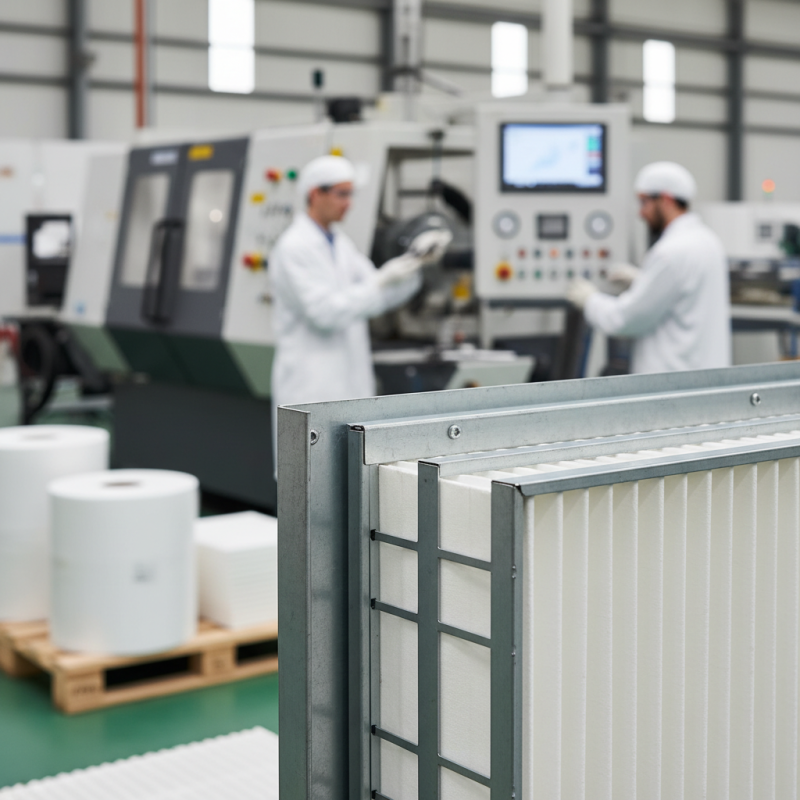
The manufacturing process of custom industrial HEPA filters begins with selecting the right materials. Primarily,
fiberglass is used for the filter media. This choice is vital. It must balance efficiency and
cost. Some manufacturers fail to consider the specific requirements of their clients, leading to subpar products.
The next step involves precise crafting of the filter shape and size. Equipment must be calibrated accurately. Inconsistencies here can result in
unfit filters. Customization options fail when the measurements are off. Attention to detail is crucial. Each order needs careful review to match
specifications exactly.
Once shaped, filters undergo rigorous assembly. This includes pleating the filter media to enhance surface area. Workers must be trained adequately.
Quality control should not be taken lightly. Each filter should be inspected multiple times. Oversights in this step can lead to significant performance issues.
Custom industrial HEPA filters should not just meet standards; they should exceed them.
Custom HEPA filters are essential in various industries. The production process depends heavily on specific materials. The primary element used is glass fiber. This material is known for its high efficiency and ability to trap small particles. Glass fibers can capture particles as small as 0.3 microns, ensuring cleaner air.
The filter media is typically combined with an adhesive. This glue secures the fibers and enhances overall performance. Another key component in production is the frame material. Options often include cardboard or metal. Cardboard is lightweight and cost-effective. Metal frames provide durability and longevity, ideal for challenging environments.
Manufacturers must consider environmental factors. For instance, choosing eco-friendly adhesives can reduce emissions during production. It's a growing concern. A report from the EPA indicates that up to 30% of industrial emissions come from improper manufacturing processes. Many companies are reassessing their material choices. They aim for sustainability while achieving performance targets, a challenging balance. The journey toward optimal manufacturing is ongoing and requires reflection on current practices.
| Material | Type | Properties | Applications |
|---|---|---|---|
| Glass Fiber | HEPA Filter Media | High filtration efficiency, chemical resistance | Industrial air filtration |
| Polypropylene | Synthetic Fiber | Lightweight, moisture resistant | Pharmaceutical environments |
| Activated Carbon | Adsorbent Material | Chemical adsorption, odor removal | HVAC systems |
| Nickel-Plated Steel | Frame Material | Corrosion resistance, durability | Filter frames and supports |
| Polyethylene | Backing Material | Chemical resistance, flexibility | General filter applications |
HEPA (High-Efficiency Particulate Air) filters are essential for clean air in various industries. Their manufacturing process involves several steps. Initially, selecting the right materials is crucial. The most common media is glass fiber. This material offers high filtration efficiency while maintaining airflow. Industry reports indicate that HEPA filters can capture up to 99.97% of particles as small as 0.3 microns.
Next, the media is cut and pleated. This increases the surface area for particle capture. The pleating must be uniform to ensure efficient performance. After pleating, the media is combined with frame materials. These frames must be sturdy to hold the delicate filter media without bowing. Some manufacturers face challenges in maintaining consistent quality during this phase.
Tips: Regular quality checks are vital. Small errors in cutting or pleating can lead to significant performance issues. Consider using automated equipment for consistency.
After assembling, the filters undergo rigorous testing. They must pass standard efficiency tests. Some filters may not meet the required standards. Continuous improvement is key in this process. Ultimately, the goal is to produce reliable filters. As trends shift in air quality standards, adaptations can be necessary. Balancing innovation with proven methods remains a challenge.
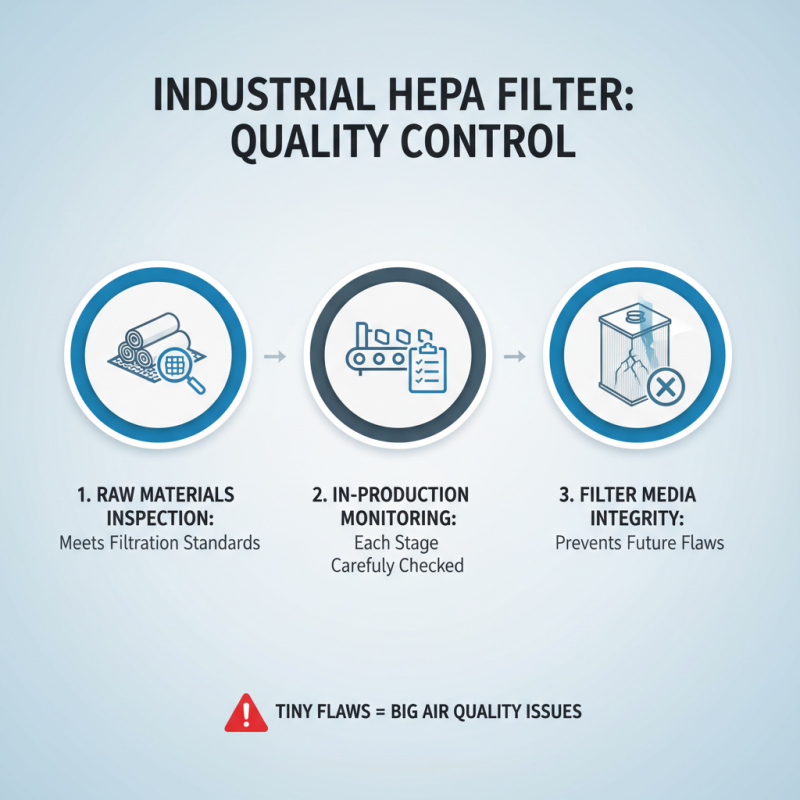
In the manufacturing of custom industrial HEPA filters, quality control is paramount. Each stage in the production line requires careful monitoring. Raw materials must meet specific standards to ensure optimal filtration performance. Inspecting the integrity of filter media can prevent future failures. Tiny flaws can lead to significant issues in air quality.
Testing procedures are crucial. Every filter batch undergoes rigorous testing. This includes measuring particle capture efficiency and airflow resistance. The results can vary. Some filters may not meet the desired specifications. Engineers must be prepared to go back and examine the process. Such adjustments help improve future productions.
Documentation plays a vital role. Keeping records of tests and inspections creates a clear trail. This can reveal patterns over time. Not all filters pass on the first try. Discovering common defects can guide future designs. The goal is to minimize errors and enhance reliability. Continuous improvement is essential in maintaining quality standards.
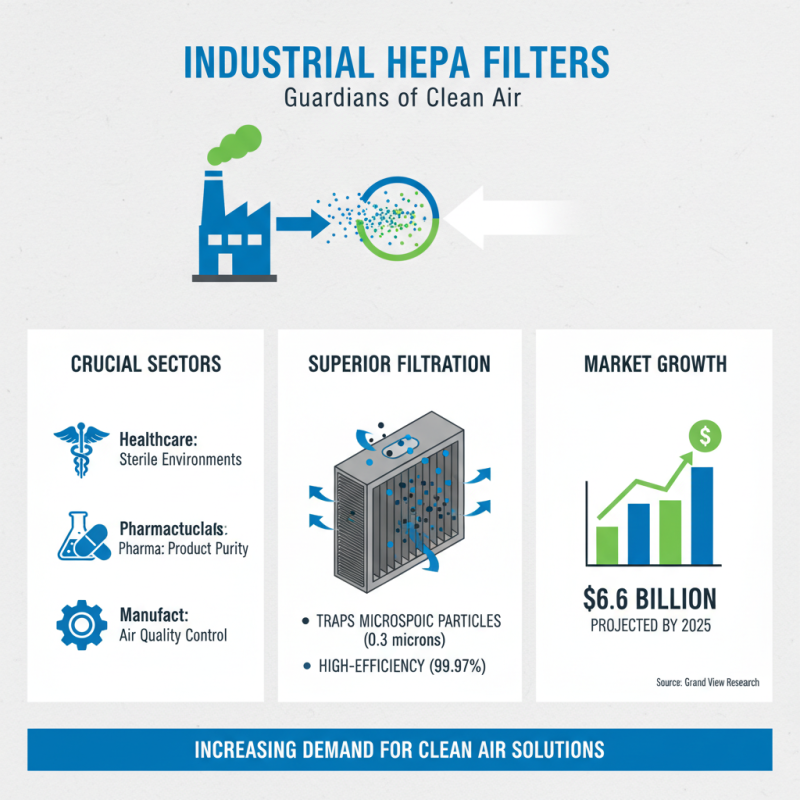
Custom industrial HEPA filters play a crucial role in various sectors. They excel in filtration processes for industries like healthcare, pharmaceuticals, and manufacturing. According to a report by Grand View Research, the HEPA filter market is projected to reach $6.6 billion by 2025. This highlights a growing demand for high-efficiency filters that can trap microscopic particles.
The benefits of custom industrial HEPA filters are profound. They can remove 99.97% of particles as small as 0.3 microns. This efficiency is vital in maintaining air quality. In hospitals, clean air is essential for patient safety. Similarly, in manufacturing, contamination can lead to product defects. A study from the Environmental Protection Agency emphasized the importance of air filtration in reducing allergens and pollutants, showcasing a clear need for tailored solutions.
However, customization comes with challenges. Sourcing high-quality materials is often difficult. The manufacturing process must be strictly controlled to maintain performance standards. Discrepancies can result from improper engineering, leading to inefficiencies. Companies must continually assess their filtration needs and improve designs. Balancing cost with effectiveness remains an ongoing struggle. The industry must reflect on these issues to enhance filtration technologies.